
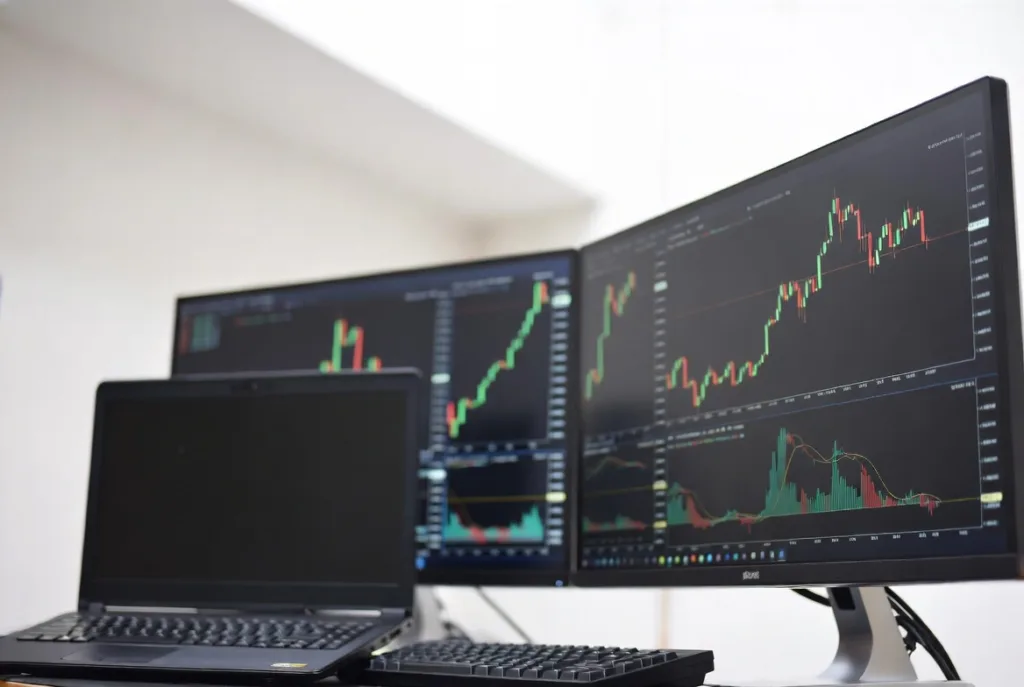
A futures broker acts as an intermediary between you and the exchange where futures contracts trade. Without one, retail traders cannot access markets like the Chicago Mercantile Exchange (CME) or Intercontinental Exchange (ICE). These brokers hold memberships or clearing arrangements that allow them to route your orders, manage your margin deposits, and provide the infrastructure needed to trade standardized derivative contracts.
The futures brokerage meaning extends beyond simple order routing. These firms maintain relationships with clearinghouses, monitor your account’s risk exposure in real time, and ensure compliance with both exchange rules and federal regulations. Unlike stock trading, where settlement happens two business days later, futures positions are marked to market daily—your broker calculates gains and losses at the close of each session and adjusts your account balance accordingly.
Regulatory oversight comes primarily from the Commodity Futures Trading Commission (CFTC) and the National Futures Association (NFA). Every legitimate futures broker must register as a Futures Commission Merchant (FCM) with these bodies. This registration process involves capital requirements, background checks, and ongoing audits to protect customer funds.
Direct market access doesn’t exist for individual traders in futures. Even professional traders at hedge funds route orders through FCMs that hold exchange memberships. The broker’s clearing system handles the complex post-trade processes: matching, netting positions, and interfacing with the clearinghouse that guarantees contract performance.
What Does a Futures Broker Do
Order execution forms the core service. When you click “buy” on a crude oil contract, your broker’s system validates you have sufficient margin, routes the order to the CME Globex electronic platform, receives the fill confirmation, and updates your account—all within milliseconds. For less liquid contracts, brokers may offer phone-based execution through floor brokers or desk traders who work orders manually.
Margin lending distinguishes futures brokers from cash-only services. Since futures contracts require only a fraction of the contract value as collateral, brokers effectively extend credit by allowing you to control large positions with small deposits. A single E-mini S&P 500 contract represents $50 exposure for each index point; at 5,200, that’s $260,000 of notional value controlled with roughly $13,000 in margin.
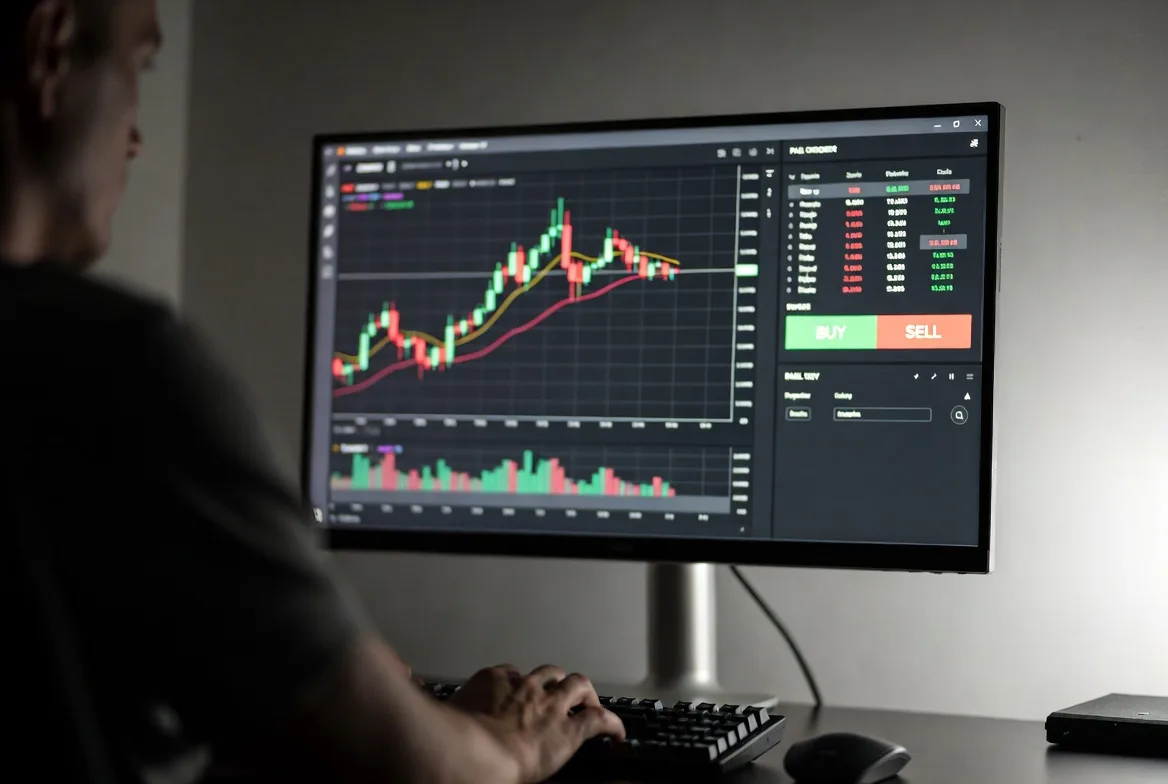
Platform access varies dramatically across brokers. Discount firms often provide basic web interfaces or license third-party software like NinjaTrader or TradingView. Full-service brokers may develop proprietary platforms with advanced charting, algorithmic order types, and integrated options analytics. Mobile apps have become standard, though professional traders still prefer desktop setups with multiple monitors for watching correlated markets.
Research tools range from basic market commentary to sophisticated analytics. Some brokers employ in-house analysts who publish daily outlooks on grains, energies, or interest rate products. Others provide access to third-party research from firms like Barchart or Morningstar. Institutional-focused brokers might offer custom research, including supply-demand models for agricultural commodities or curve analysis for Treasury futures.
Risk management support includes real-time margin monitoring and automated alerts. If your account approaches maintenance margin levels, most brokers send email or SMS warnings before issuing a margin call. Some platforms display real-time “buying power” calculations showing exactly how much additional margin you can use. More sophisticated brokers offer portfolio margining that recognizes offsetting positions across related contracts, reducing overall margin requirements.
Commodity Futures Brokers vs General Futures Brokers
Specialization matters when trading agricultural products, metals, or energy contracts. Commodity-focused brokers often maintain physical market expertise—their analysts may track crop reports, refinery utilization rates, or mine production data. These firms sometimes serve commercial hedgers (farmers, oil producers, manufacturers) alongside speculators, giving them insight into fundamental supply-demand dynamics.
General futures brokers handle the full spectrum: equity index futures, interest rate products, currencies, and commodities. They’re better suited for traders who diversify across asset classes or focus on financial futures like E-mini contracts. The commission structures and platform features typically favor electronic traders rather than those needing specialized commodity intelligence.
Futures Broker vs Stock Broker
Markets traded represent the fundamental divide. Stock brokers provide access to equity exchanges (NYSE, Nasdaq) where you buy shares representing company ownership. Futures brokers connect you to derivatives exchanges (CME, CBOT, NYMEX) where contracts obligate delivery of an underlying asset—or more commonly, cash settlement based on that asset’s price.
Leverage differences are substantial. Stock traders using margin can typically borrow 50% of a position’s value under Regulation T. Futures margin requirements often represent just 3-10% of contract value, creating far greater leverage. That $260,000 E-mini S&P position requires roughly 5% margin, whereas buying $260,000 of SPY shares would need $130,000 in a stock account.
Margin requirements work differently. Stock margin is a loan with interest charges; you’re borrowing money to buy securities. Futures margin is a performance bond—a good-faith deposit ensuring you can cover daily losses. No interest accrues on futures margin, though you forego interest on those funds unless your broker sweeps idle cash into money market accounts.
Trading hours extend nearly around the clock for major futures contracts. The E-mini S&P 500 trades 23 hours daily, Sunday evening through Friday afternoon, with only a one-hour break. Stock markets operate 9:30 AM to 4:00 PM Eastern on business days, with limited after-hours sessions. This 24-hour access matters for traders reacting to overseas news or managing risk outside regular hours.
Contract expirations create unique dynamics. Stock positions can be held indefinitely (until the company delists or you sell). Futures contracts expire monthly or quarterly, forcing traders to either close positions or roll them to the next contract month. This rollover process involves transaction costs and potential slippage, especially in less liquid contracts.
Regulatory bodies differ. Stock brokers register with the Securities and Exchange Commission (SEC) and FINRA. Futures brokers answer to the CFTC and NFA. Some firms hold dual registration, allowing them to offer both stocks and futures, but they maintain separate account structures and regulatory compliance systems for each.
Types of Futures Broker Accounts
Individual accounts serve retail traders and small professionals. You’ll need to complete a futures trading agreement acknowledging the risks, provide financial information demonstrating suitability, and fund the account with at least the broker’s minimum deposit. These accounts offer full control over trading decisions and direct platform access.
Institutional accounts cater to hedge funds, commodity trading advisors (CTAs), and commercial hedgers. They feature higher margin limits, negotiated commission rates, and often include prime brokerage services like consolidated reporting across multiple executing brokers. Minimum deposits typically start at $100,000 or higher.
Cash accounts don’t exist in futures the way they do in stocks. Every futures position requires margin, so all futures accounts function as margin accounts by default. However, some traders maintain excess cash beyond margin requirements to avoid margin calls during volatile periods—this “cushion” approach reduces leverage but provides breathing room.
Discretionary accounts grant trading authority to a third party, usually a registered CTA or trading advisor. You retain ownership of the funds, but the advisor makes all buy and sell decisions. These arrangements require a limited power of attorney and often involve management fees plus performance-based incentives.
Non-discretionary accounts keep decision-making authority with the account holder. Even if you receive advice or trade signals from an advisor, you must approve each trade. Most retail traders operate non-discretionary accounts.
| Account Type | Margin Availability | Typical Minimum Deposit | Best For |
|---|---|---|---|
| Individual Retail | Standard exchange margins + broker add-on | $500-$5,000 | Self-directed traders, micro contracts |
| Individual Active Trader | Reduced intraday margins | $10,000-$25,000 | Day traders, spread traders |
| Managed (Discretionary) | Standard margins | $25,000-$100,000 | Investors preferring professional management |
| Institutional | Negotiated portfolio margining | $100,000+ | Hedge funds, CTAs, prop firms |
Futures Broker Costs and Commission Structures
Per-contract fees form the baseline cost. Discount brokers charge $0.25 to $1.50 per contract side for electronic execution. Full-service brokers offering research, advice, and phone execution typically charge $3 to $10 per side. A “side” means one half of the transaction—buying to open is one side, selling to close is another.
Round-turn pricing bundles both sides into a single fee. A $2.50 round-turn rate means you pay $2.50 total for entering and exiting a position, versus $1.25 per side. Most brokers quote round-turn rates for simplicity, but you’ll see the per-side deduction on your statements since the exchange and clearing fees are assessed per side.
Platform fees vary by software sophistication. Basic web platforms are usually free with active trading (defined as 10-30 trades monthly). Professional platforms like CQG, Trading Technologies, or proprietary systems may cost $50-$300 monthly, sometimes waived if you meet volume thresholds. Desktop software licenses for NinjaTrader or MultiCharts can add another $50-$100 monthly unless you purchase a lifetime license.
Data fees cover real-time exchange quotes. CME market data runs roughly $10-$15 monthly for delayed data, $50-$110 for real-time depending on the number of exchanges. If you trade only E-mini S&P 500, you need just CME equity data. Trading crude oil, gold, and currencies requires CME, NYMEX, and ICE feeds. Some brokers bundle data fees into higher commission rates; others charge them separately.

Inactivity fees penalize dormant accounts. If you don’t trade for 3-6 months, brokers may charge $25-$50 monthly to cover account maintenance costs. Active traders avoid these fees entirely. The threshold is usually modest—one or two trades per month.
Exchange and regulatory fees add to each transaction. The CME charges $1.16-$1.42 per side in exchange and clearing fees for most contracts. The NFA assesses $0.02 per side. These pass-through costs appear as separate line items on your statement, on top of the broker’s commission.
Here’s a simplified comparison using E-mini S&P 500 contracts:
| Broker Type | Commission (Round-Turn) | Platform Fee | Data Fee | Total Cost (10 Contracts/Month) |
|---|---|---|---|---|
| Deep Discount | $0.50 | $0 (web only) | $15 | $20 |
| Mid-Tier | $2.50 | $0 (waived >10 trades) | $25 | $50 |
| Full-Service | $8.00 | $100 (professional platform) | Included | $180 |
These examples exclude exchange fees, which add roughly $1.30 per side regardless of broker.
Futures Broker Margin Requirements
Initial margin represents the amount needed to open a position. The CME sets exchange minimums—for example, $13,200 for one E-mini S&P 500 contract as of early 2026. Your broker may require more, adding a “house margin” buffer of 10-50% above the exchange minimum. This protects the broker from rapid market moves that could push your account into deficit.
Maintenance margin is the minimum equity needed to keep a position open. It’s typically 70-85% of initial margin. If your account balance falls below maintenance margin due to losses, you’ll receive a margin call demanding additional funds or position liquidation.
Day trading margins offer reduced requirements for positions closed before the session ends. Many brokers cut margins by 50-75% for day traders, recognizing the lower overnight risk. That $13,200 E-mini margin might drop to $500-$1,000 for day trades. However, if you hold past the close, the full initial margin applies immediately, potentially triggering a margin call if you’re underfunded.
Brokers set requirements above exchange minimums for several reasons. Volatile markets prompt temporary increases—during the 2025 banking crisis, some brokers doubled margins on financial futures overnight. Less liquid contracts often carry higher house margins because they’re harder to liquidate in emergencies. Accounts with pattern day trading violations or repeated margin calls may face permanently elevated requirements.
How Margin Calls Work
Margin calls occur when your account equity drops below maintenance margin. Suppose you’re long one E-mini S&P 500 at 5,200 with $13,200 initial margin and $11,000 maintenance margin. If the index falls to 5,150, you’ve lost $2,500 (50 points × $50 per point). Your equity is now $10,700, below the $11,000 threshold.
The broker issues a margin call, typically via email and phone, demanding you deposit additional funds to restore your account to initial margin levels—$13,200 in this case. You might have until the next business day, or just hours if volatility is extreme. Some brokers automatically liquidate positions without warning if equity falls to a critical level, usually 25-50% below maintenance margin.
Margin call responses include depositing cash, liquidating positions, or adding collateral like Treasury bills. Wire transfers are fastest, though some brokers accept same-day ACH or check deposits if received early enough. Ignoring a margin call results in forced liquidation at whatever price is available, potentially locking in significant losses.
How to Choose a Regulated Futures Broker
Registration requirements start with verifying NFA membership. Every legitimate futures broker appears in the NFA’s Background Affiliation Status Information Center (BASIC) database at nfa.futures.org. Search the firm name and check for “Futures Commission Merchant” registration status. Look for clean disciplinary history—a few customer disputes are normal for large firms, but patterns of fraud or misappropriation are red flags.
CFTC registration complements NFA membership. The CFTC maintains oversight authority and can suspend or revoke a broker’s registration for serious violations. Check the CFTC’s website for any ongoing enforcement actions or consent orders involving the firm.
Capitalization requirements ensure brokers can withstand market shocks. FCMs must maintain adjusted net capital of at least $1 million, though most major brokers hold $50 million to $1 billion or more. Higher capital levels provide a buffer against operational losses and inspire confidence during market stress. The NFA publishes financial data for member firms, though it’s often several months delayed.
Segregated funds protect customer deposits. Regulations require brokers to keep customer funds in separate accounts, not commingled with the firm’s operating capital. This segregation means your margin deposits remain yours even if the broker faces financial trouble—in theory. The 2011 MF Global bankruptcy revealed weaknesses in segregation rules, prompting reforms, but the risk never fully disappears.
Customers should verify their broker is registered with the NFA and has a clean disciplinary record. Don’t assume a well-known name guarantees safety—perform due diligence on capitalization, segregation practices, and whether the firm is backed by a larger financial institution.
Mark Wetjen
Red flags include pressure to deposit large sums immediately, promises of guaranteed returns, and reluctance to provide NFA registration numbers. Unregistered offshore brokers may offer lower margins or tax advantages but provide zero regulatory protection. If the firm vanishes or refuses withdrawals, you have no recourse through US authorities.
Futures Broker Selection Checklist
Platform quality matters more than most traders initially realize. Test the demo account thoroughly—place market orders during volatile periods to check execution speed, simulate stop-loss orders to verify they trigger correctly, and explore charting tools to ensure they meet your analytical needs. Crashes during high-volume events like Fed announcements are unacceptable.
Customer service responsiveness separates good brokers from mediocre ones. Call the support line with a technical question and note hold times and answer quality. Check if they offer 24-hour support matching futures market hours. Email a question about margin requirements and see how quickly you receive a substantive reply. Brokers with offshore call centers often struggle to answer complex questions about margin calculations or contract specifications.
Margin rates directly impact your capital efficiency. Compare initial and maintenance margins across brokers for your preferred contracts. Some firms offer tiered margin structures where active traders qualify for reduced requirements. Others provide portfolio margining that recognizes hedged positions—holding both long and short positions in related contracts reduces overall margin.
Commission structures require careful math. A broker charging $0.50 per side but $150 in monthly platform fees costs more than one charging $2.00 per side with free software if you trade fewer than 100 contracts monthly. Factor in data fees, inactivity charges, and any volume discounts. Request a detailed fee schedule showing all potential costs.
Product access determines whether a broker suits your strategy. If you trade agricultural spreads, verify the broker offers all grain contracts with competitive margins. Cryptocurrency futures traders need brokers supporting CME Bitcoin and Ethereum contracts. International traders may want access to Eurex or SGX products, requiring brokers with global clearing relationships.
Additional considerations include account funding speed (wire transfers vs ACH), withdrawal processing times, tax reporting quality (detailed 1099-B forms simplify filing), and educational resources. Some brokers offer webinars, market analysis, or mentoring programs valuable to newer traders.
FAQs
No license is required to trade futures as a retail customer. You simply open an account, complete a risk disclosure agreement, and fund it with at least the broker’s minimum deposit. However, if you want to manage other people’s money or provide trading advice for compensation, you must register as a Commodity Trading Advisor (CTA) or Associated Person (AP) with the NFA. This involves passing the Series 3 exam and meeting ongoing compliance obligations.
Minimums range from $500 to $25,000 depending on the broker and account type. Discount brokers catering to micro contract traders may accept $500-$1,000, enough to trade micro E-mini contracts with $50-$200 margin requirements. Standard futures contracts require $5,000-$10,000 minimums to provide cushion beyond the margin requirement. Full-service brokers and those offering managed accounts typically require $25,000 or more to justify the overhead of personalized service.
Some brokers offer both stocks and futures under one login, but they maintain separate account structures internally. Charles Schwab, Interactive Brokers, and TD Ameritrade (now part of Schwab) provide integrated platforms where you can trade equities and futures without opening accounts at different firms. However, you’ll still complete separate futures agreements and comply with futures-specific margin rules. Pure stock brokers like Robinhood or Webull don’t offer futures access—you’d need to open an account with a registered FCM.
The CFTC holds primary regulatory authority over futures markets and brokers. It writes rules, conducts examinations, and brings enforcement actions against violators. The NFA functions as a self-regulatory organization, handling day-to-day oversight including broker registration, audits, and dispute resolution. Every FCM must join the NFA and comply with its capital, reporting, and ethical standards. State securities regulators have no jurisdiction over futures brokers—this is purely federal regulation.
Customer funds should be protected through segregation requirements, meaning your margin deposits sit in separate accounts from the broker’s operating funds. If the broker fails, a bankruptcy trustee works to return segregated customer funds, ideally dollar-for-dollar. However, the MF Global and Peregrine Financial collapses showed that segregation can be violated through fraud or mismanagement. Recovery took years and some customers received less than 100% of their funds. Unlike stock brokers covered by SIPC insurance up to $500,000, futures accounts have no equivalent insurance. This makes broker selection and due diligence critical.
Yes, commissions and all trading-related expenses are deductible against futures trading income. Futures trades receive special tax treatment under Section 1256 of the tax code: 60% of gains are taxed as long-term capital gains and 40% as short-term, regardless of holding period. This creates a blended rate lower than ordinary income tax rates. You report futures trading on Form 6781 and deduct commissions, data fees, platform costs, and even educational expenses related to trading. Keep detailed records since brokers’ 1099-B forms may not capture all deductible expenses. Consult a tax professional familiar with trader tax status if futures trading is your primary income source.
Selecting a futures broker requires balancing cost, service quality, and regulatory protection. The cheapest option rarely proves optimal once you factor in platform limitations, margin policies, and support quality during the stressful moments when you need help most. Start by verifying NFA registration and reviewing disciplinary history, then narrow your choices based on the specific contracts you plan to trade and whether you need research support or just execution services.
Test multiple platforms with demo accounts before committing capital. Pay attention to how the software handles order entry during fast markets—a frozen platform during a volatile crude oil session can cost far more than years of higher commissions would. Read the fine print on margin policies, especially how the broker handles day trading margins and whether they reserve the right to increase requirements without notice.
Most traders benefit from starting with a mid-tier broker offering reasonable commissions, solid platform technology, and responsive support. As your experience and trading volume grow, you can reassess whether a deep-discount broker or full-service firm better suits your evolved needs. The futures market’s leverage and complexity make broker selection more consequential than in stock trading—a poor choice can amplify losses or create operational headaches that distract from actual trading decisions.