Futures represent a different breed of investment compared to buying shares of Apple or Microsoft. Instead of owning pieces of companies, you’re entering binding agreements about future asset prices—agreements that come with serious legal obligations on both sides. These standardized contracts trade on major exchanges like the CME, covering everything from next season’s soybean harvest to mortgage-backed securities and the S&P 500 index itself.
Why do investors gravitate toward futures? The ability to control massive asset positions with relatively small deposits creates opportunity—you might command $250,000 worth of stock index exposure with just $10,000 down. Trading never stops, either. Markets operate almost continuously, and you can profit whether prices rise or fall. But here’s the catch: that same leverage that multiplies your gains will amplify your losses just as ruthlessly. Plenty of newcomers learn this the hard way, watching their accounts evaporate in days because they didn’t respect the downside.
Before you risk actual money, you’ll need a working knowledge of contract mechanics, realistic understanding of what can go wrong, and enough market awareness to avoid the most common mistakes that wipe out beginners.
What Is Futures Investing and How Does It Work
A futures contract creates a firm commitment between two parties to exchange a specific asset at a locked-in price on a set date. Think of it as the opposite of buying options. Options give you the right to walk away if things don’t work out—futures don’t offer that luxury. Both sides must perform when the contract expires.
Here’s the basic setup: Going long (buying a contract) means you’ve agreed to take possession of the asset at the strike price. Going short (selling a contract) obligates you to deliver it. Now, most retail traders have zero interest in accepting delivery of 40,000 pounds of live cattle or 5,000 bushels of corn. Instead, you’ll close the position before expiration by making the opposite trade, pocketing the difference between your entry and exit prices.
The math works simply. Buy crude at $76 per barrel and sell at $79, and you’ve made $3 per barrel. Standard crude contracts cover 1,000 barrels, so that $3 move puts $3,000 in your pocket. Same principle in reverse—if prices move against you by $3, you’re down $3,000.
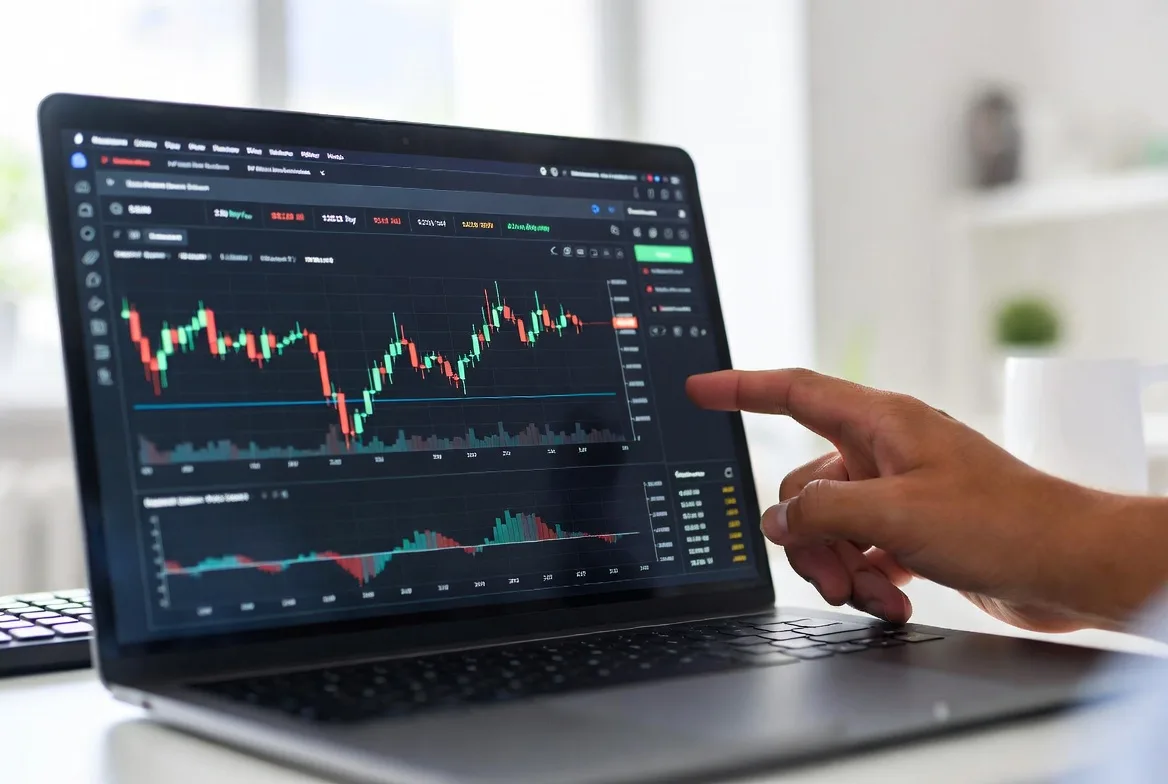
Margin makes the whole system accessible without ridiculous capital requirements. To control 1,000 barrels at $76 each (worth $76,000), you won’t need to deposit the full amount. Your broker might ask for $6,000 as initial margin. That’s roughly 13-to-1 leverage, which means a 1% price swing creates a 13% change in your account. Brokers set maintenance margin levels—typically around 75% of initial margin—and they’ll demand more cash if your account drops below that threshold.
Settlement happens two ways. Physical delivery means actual commodity transfer, though statistics show fewer than 2% of contracts end this way. Cash settlement, standard for financial contracts, simply credits or debits your account based on final prices versus your contract price. All stock index futures settle in cash—nobody wants to receive delivery of 500 different stocks.
Daily settlement sets futures apart. Every trading day, your account gets marked to market based on official settlement values. Long positions see credits when prices rise. Falling prices trigger immediate debits. This daily reconciliation protects the clearinghouse from credit risk, but it creates headaches during volatile stretches. You might face margin calls even though you planned to hold the position longer and your analysis eventually proves correct.
Types of Futures Markets You Can Trade
Futures exchanges list contracts on nearly every major asset class imaginable, giving investors exposure to markets that would otherwise require enormous capital or specialized infrastructure. The landscape breaks into two main categories—physical commodities and financial instruments—each serving different participants with different goals.
Commodity Futures Market Basics
Physical commodities form the original futures markets, with contracts standardized around measurable quality specs. Agricultural products include grains (corn, wheat, soybeans), livestock (live cattle, feeder cattle, lean hogs), and softs (coffee, cocoa, sugar, cotton). Energy products cover crude oil, natural gas, RBOB gasoline, and heating oil. The metals category splits between precious (gold, silver, platinum, palladium) and industrial (copper, aluminum).
Each commodity contract spells out exact quality standards, approved delivery points, and precise quantities. Gold contracts on COMEX represent 100 troy ounces of .995 fine gold. Corn contracts at the Chicago Board of Trade specify 5,000 bushels meeting Number 2 Yellow standards, deliverable to exchange-approved facilities throughout the Midwest. These rigid specifications keep trading orderly and markets liquid.
Weather drives a lot of commodity price action, along with political upheaval and supply chain breakdowns. A drought in Brazil hammers coffee prices globally. When OPEC cuts production, crude oil can jump $5-10 per barrel overnight. USDA crop reports move grain markets violently—I’ve seen corn futures gap limit-up within minutes of worse-than-expected yield estimates. These markets attract commercial hedgers (farmers protecting crop values, airlines locking in fuel costs) alongside speculators chasing profits from price trends.

Financial Futures and Interest Rate Contracts
Financial futures track assets without physical form. Stock index products follow benchmarks like the S&P 500, Nasdaq 100, Dow Jones Industrial Average, and Russell 2000. Currency futures let you trade major pairs—EUR/USD, USD/JPY, GBP/USD—for speculation or hedging foreign exchange exposure.
Interest rate futures deserve special attention because they’re central to institutional bond portfolio management. Treasury contracts track U.S. government debt across the curve. The most actively traded include 10-year notes, 30-year bonds, 5-year notes, and 2-year notes. Each Treasury contract has $100,000 par value as the underlying.
These instruments move inversely to interest rates. When rates climb, Treasury prices fall and futures contracts drop. Declining rates boost bond values, pushing futures higher. Portfolio managers use Treasury futures for hedging, adjusting duration exposure, and betting on Federal Reserve policy shifts. A pension fund holding $75 million in bonds might short Treasury futures as insurance against rising rates instead of liquidating actual securities.
Financial futures generally offer better liquidity than commodity contracts. The E-mini S&P 500 trades nearly 24 hours with tight bid-ask spreads and extraordinary volume—it’s one of the world’s most actively traded derivatives. You can move big positions without much market impact.
Core Futures Contract Basics Every Investor Should Know
Understanding contract specifications prevents costly mistakes. Each futures product trades with explicit parameters that determine your actual exposure and risk.
Contract size specifies exactly how much of the underlying asset one contract controls. Crude oil? That’s 1,000 barrels. E-mini S&P 500 contracts multiply the index level by $50, so at 5,800 on the S&P, one contract represents $290,000 of index exposure. Micro contracts—one-tenth the size of standard e-minis—work better for smaller accounts.
Tick size defines the minimum price increment. Gold moves in 10-cent steps worth $10 each. E-mini S&P 500 contracts tick in quarter-point increments valued at $12.50 per tick. Knowing tick values helps you calculate profit and loss before entering trades. Twenty ticks in gold equals $200; that same move in E-mini S&P generates $250.
Expiration dates follow standardized quarterly schedules. Most futures expire in March, June, September, and December. Some contracts like crude offer monthly expirations. You’ll need to close positions or roll them to later months before expiration to avoid unwanted delivery obligations or unfavorable cash settlement. The front-month contract (nearest expiration) always shows the highest volume and tightest spreads.
Leverage creates both opportunity and danger. Controlling an E-mini S&P position worth $290,000 with $12,000 initial margin gives you roughly 24-to-1 leverage. Each 1% index move creates a 24% swing in your margin deposit. This works both ways—a 4% adverse move could wipe out your entire margin and force liquidation if you can’t meet margin calls.
Margin calls happen when account equity falls below maintenance margin levels. Brokers typically demand immediate deposits to restore accounts to initial margin. Unlike stock margin calls where you might have a few days to respond, futures margin calls require same-day action. Can’t meet the call? Your broker liquidates positions at current market prices, regardless of your long-term outlook or analysis.
Common Futures Investing Strategies
Successful futures traders employ specific approaches matching their market views, risk tolerance, and time commitment. Four strategies dominate.
Hedging uses futures positions to offset risk in existing assets or business operations. A wheat farmer facing uncertain harvest prices sells wheat futures matching expected production. If wheat prices tank, losses on physical crop sales get offset by gains on short futures. Prices rally? The farmer gives up some upside but gains valuable price certainty. Companies use currency futures to lock exchange rates for international transactions. An American manufacturer buying European components might purchase euro futures as insurance against dollar weakness.
Speculation pursues profit from anticipated price moves without any underlying exposure to hedge. You think crude oil will climb from $73 to $81? Buy crude futures and exit at higher prices. Speculators provide the liquidity that lets commercial hedgers transfer risk. The approach carries substantial risk—get the direction wrong and losses accumulate fast. Successful speculation requires solid market analysis, emotional discipline, and systematic risk management with predetermined stop-losses.
Spread trading involves buying one futures contract while simultaneously selling a related one, profiting from changing price relationships. A calendar spread might combine long December corn with short March corn, betting the price gap will narrow. An inter-commodity spread could pair long crude against short gasoline, capturing shifts in refining margins. Spreads usually show lower volatility than outright directional bets, though relationship changes can still produce unexpected losses.
Day trading capitalizes on intraday price action, closing everything before the session ends. E-mini S&P day traders might execute dozens of trades capturing small moves of 5-10 points. This eliminates overnight gap risk but demands constant screen time, fast execution, and psychological discipline to cut losers quickly. Commission costs add up—you need high win rates or good risk-reward ratios to overcome transaction expenses.
Each approach demands different skills and capital. Hedgers need actual exposure requiring protection. Speculators need deep market knowledge and emotional control. Spread traders need to understand fundamental relationships between contracts. Day traders need available time, reliable technology, and the ability to make rapid decisions under pressure.
Futures Investing Risks and Rewards
Leverage—futures trading’s defining feature—creates both the biggest opportunity and the most severe risk.
Leverage risk dominates every serious conversation about futures dangers. The margin efficiency letting you control $180,000 in assets with $7,500 can devastate accounts within days or hours during volatile periods. Several modest losses compound aggressively at 20-to-1 leverage. Beginners consistently underestimate how fast adverse moves trigger margin calls, forcing liquidation at terrible prices.
Market volatility in futures often exceeds the underlying asset’s normal swings. Commodity contracts frequently gap overnight after weather reports or geopolitical events. Currency futures react violently to surprise central bank announcements. When oil markets went haywire in early 2020, crude contracts moved $6-8 per barrel in single sessions—that’s $6,000-8,000 per contract. Volatility creates opportunity for skilled traders but destroys those lacking proper risk controls.
Margin calls present unique practical risk beyond general market risk. You might hold the correct long-term view, but if your account can’t withstand interim adverse swings, you’ll face forced liquidation before your analysis proves right. A trader buying Treasury futures expecting rate cuts could face margin calls if rates temporarily spike. Without adequate reserves, the position gets closed before the anticipated favorable move materializes.
Beginning futures traders consistently misjudge how rapidly and severely leverage multiplies losses. You might be directionally correct about the market yet still lose everything if you don’t properly size positions and keep enough capital in reserve to handle normal volatility.
John Lothian
Profit potential attracts sophisticated participants to futures. Traders positioned correctly during recent Treasury rallies captured 45-70% returns as interest rate futures surged. Commodity traders who anticipated grain supply shocks realized six-figure gains from relatively modest capital. These returns reflect leverage working in your favor, though capturing them requires precise timing, market skill, and discipline to bank profits before reversals.
Diversification benefits emerge because futures returns often show low correlation with standard stock and bond portfolios. Commodity futures can rally during inflationary periods when equities struggle. Currency futures provide international exposure without foreign equity risks. Managed futures programs—professionally run futures portfolios—have historically posted positive returns during equity bear markets, offering genuine diversification instead of just more asset classes.
Superior liquidity in major contracts exceeds most alternative markets. E-mini S&P 500 trading runs nearly 24 hours with millions of contracts changing hands daily. Large positions enter and exit with minimal market impact. This liquidity proves invaluable during volatile periods when other markets might experience serious disruption. Bid-ask spreads on actively traded futures typically measure just one or two ticks, keeping transaction costs low.
How to Get Started With Futures Investing
Moving from education to actual trading requires methodical preparation and realistic expectations about capital needs, time commitment, and the learning curve.
Choosing a broker starts with verifying registration with the National Futures Association (NFA) and Commodity Futures Trading Commission (CFTC). Established futures brokers like Interactive Brokers, TD Ameritrade’s futures division, and TradeStation offer robust platforms, research tools, and competitive commissions. Compare per-contract fees—usually $1-3 per side—plus platform charges, data feed costs, and margin rates. Some firms cater to active traders with sophisticated order types and analytics, while others emphasize beginners through educational content and streamlined interfaces.
Opening a futures account involves more extensive paperwork than standard brokerage accounts. Expect detailed financial disclosures, prior trading experience questions, and formal risk acknowledgment. Brokers assess whether your net worth and income support futures activity. Minimum deposits vary, though most require $5,000-10,000 to open futures accounts, with $25,000+ recommended for meaningful participation without excessive leverage.
Capital requirements depend on which contracts you’ll trade and your risk tolerance. While initial margin for E-mini S&P might run $12,500, prudent risk management suggests maintaining 2-3 times that buffer to absorb normal volatility without margin calls. Traders focusing on micro contracts can start smaller—micro E-mini S&P requires roughly $1,250 initial margin. A realistic starting point for diversified futures trading is $25,000-50,000, allowing proper position sizing across multiple contract types.
Educational resources should come before deploying live capital. CME Group offers free courses covering fundamentals, specifications, and methodologies. The NFA provides investor materials emphasizing risk awareness. Books like “Trading Commodities and Financial Futures” by George Kleinman deliver practical frameworks. Many successful traders recommend 3-6 months studying markets, analyzing charts, and understanding contract behavior before risking money.
Paper trading lets you practice without financial exposure. Most broker platforms provide simulation using real-time data and order execution. Treat paper trading seriously—use realistic position sizes, follow your trading rules, and document every simulated trade. The goal isn’t proving you can generate paper profits but developing consistent processes and understanding how quickly gains and losses accumulate. Three months of disciplined simulation reveals whether your methodology has genuine merit.
Your first live trade should prioritize capital preservation over profit. Start with highly liquid contracts like E-mini S&P or micro versions. Trade small—one or two contracts maximum—until you understand how your emotions respond to real money at risk. Use stop-loss orders on every position to define maximum loss before entry. Avoid trading during major economic announcements until you’ve witnessed how violent those moves become. Keep detailed records of every trade, including your reasoning, prices, and lessons learned.
Many beginning traders blow up their first account. Approaching futures as multi-year skill development instead of a quick-wealth scheme puts you among the small minority who develop sustainable proficiency.
Comparison of Major Futures Contract Types
| Characteristic | Commodity Futures | Financial Futures (Index/Currency) | Interest Rate Futures |
|---|---|---|---|
| Standard Contract Size | 5,000 bushels (corn), 1,000 barrels (crude), 100 troy ounces (gold) | E-mini S&P: $50 × index level; Euro: €125,000 per contract | 10-year Treasury note: $100,000 face value |
| Typical Initial Margin | Ranges $3,500-$9,000 depending on commodity | E-mini S&P 500: $13,000-$16,000 | 10-year Treasury note: $1,800-$3,000 |
| Volatility Profile | High volatility driven by weather, geopolitics, supply shocks | Moderate to high based on economic data, earnings reports | Moderate volatility tied to Fed policy, inflation expectations |
| Common Use Cases | Hedging production/consumption, directional speculation on commodities | Equity index exposure, portfolio hedging, tactical allocation | Managing bond portfolio duration, rate speculation, hedging |
| How Settlement Works | Physical delivery possible or cash (contract-dependent) | Exclusively cash settlement | Physical delivery of Treasuries (rarely executed in practice) |
FAQs
Broker minimums typically range from $5,000 to $10,000, but starting with $25,000 or more gives you realistic cushion for sound risk management. Micro contracts allow participation with less—you could trade micro E-mini S&P with $3,500-5,000—but limited capital restricts your ability to weather normal market swings without margin calls. Your starting capital should support position sizes risking no more than 1-2% of total account value per trade.
Yes, absolutely. Futures create obligations potentially exceeding your account balance. Holding a position through extreme adverse moves while unable to meet margin calls could result in owing your broker money beyond your deposit. Brokers usually liquidate positions before accounts go negative, but price gaps and limit moves can produce losses exceeding available funds. This unlimited loss potential makes risk management—through stops and proper sizing—absolutely critical.
Futures obligate both parties to complete the transaction at expiration. Options give buyers rights without obligations. When you establish a futures position, you’ll eventually close it or accept delivery/settlement. When you buy an option, you can let it expire worthless if markets move against you, limiting loss to the premium paid. Futures require margin deposits that fluctuate daily. Options require full premium payment upfront. Futures create linear profit/loss. Options create asymmetric payoffs with defined maximum losses for buyers.
Futures carry elevated risk from leverage, daily marking to market, and margin call potential. A 5% adverse stock move reduces position value by 5%. That same 5% move in a futures contract leveraged 20-to-1 wipes out your entire margin deposit. Futures also eliminate the “buy and hold” strategy available to equity investors—you can’t simply wait for recovery when facing margin calls. However, futures provide risk management tools like stops and profit potential from declining markets, which can reduce overall portfolio risk when used properly.
Most futures close before expiration, preventing physical delivery. Statistics show under 2% of commodity contracts result in actual delivery. Traders simply execute offsetting transactions—buying to close a prior sale or selling to close a prior purchase. Many financial futures, including all stock index contracts, settle exclusively in cash with zero delivery possibility. Should you hold a physically deliverable contract through expiration, you’d coordinate storage, transportation, and quality verification—something retail participants virtually never do.
Futures receive favorable tax treatment under IRS Section 1256. Gains and losses get taxed as 60% long-term and 40% short-term capital gains, regardless of actual holding period. This 60/40 split provides better tax rates compared to short-term stock trading, where gains face ordinary income taxation. Futures positions get marked to market at year-end, meaning you recognize gains and losses on open positions without closing them. This creates potential tax obligations on unrealized gains. Consult a tax professional experienced with derivatives to understand reporting requirements and planning strategies.
Futures investing delivers powerful tools for speculation, hedging, and portfolio diversification, but the leverage making futures attractive simultaneously renders them dangerous for unprepared participants. Success demands understanding contract specs, mastering risk management, and maintaining discipline to trade within your capital constraints.
Start with education instead of capital deployment. Spend months studying how different futures markets behave, practice extensively with simulated trading, and develop a written plan defining your entry criteria, sizing methodology, and exit strategies. When you begin trading with actual funds, start small—one or two contracts in highly liquid markets—and focus on executing your process rather than generating profits.
Futures markets reward preparation, discipline, and respect for risk while punishing overconfidence, excessive leverage, and emotional decisions. Whether you’re a commercial producer hedging commodity prices, a portfolio manager adjusting fixed-income duration, or a speculator pursuing market profits, core principles remain constant: understand exactly what you’re trading, size positions appropriately for your capital, and never risk money you can’t afford to lose. Treat futures as sophisticated instruments requiring ongoing education rather than shortcuts to wealth, and you’ll position yourself among the minority achieving long-term success in these dynamic markets.