

- What Is a Trading Broker and How Do They Work
- Types of Trading Brokers Explained
- Understanding Trading Broker Fees and Commissions
- Trading Broker Requirements and Account Setup
- How to Verify Regulated Trading Brokers
- Key Factors When Comparing Trading Broker Accounts
- Common Mistakes to Avoid When Selecting a Broker
- Comparison Table: Broker Types
Your choice of brokerage determines real costs—not just whether you’ll hand over $7 per trade or nothing at all, but whether you’ll get actual help when problems arise or just a FAQ page. Right now, roughly 3,500 broker-dealers hold active U.S. registrations, and they’re not interchangeable. Some will charge you $75 quarterly for not trading enough. Others offer tools you’ll never touch while withholding features you actually need.
What Is a Trading Broker and How Do They Work
Think of a trading broker as your ticket into markets you can’t enter alone. Stock exchanges don’t accept orders from random individuals—you need a licensed intermediary. That’s what brokers do: they hold memberships at exchanges like NYSE and Nasdaq, maintain the infrastructure to route your orders, and handle the settlement process that transfers securities into your account.
Here’s a concrete example. You decide to buy 50 shares of Microsoft at 9:45 AM. Your broker receives that order, routes it to an exchange or market maker offering the best available price, executes the trade (usually within milliseconds), then updates your account to show those 50 shares by the end of the trading day. Your cash balance drops by the purchase amount plus any applicable fees.
How do brokers make money if many charge $0 commissions? Several ways. They collect interest on uninvested cash sitting in your account—often paying you 0.01% while earning 4-5% themselves. They receive payments from market makers who want your order flow (typically $0.002-$0.003 per share). For margin accounts, they charge interest rates between 6-13% annually when you borrow against your portfolio.
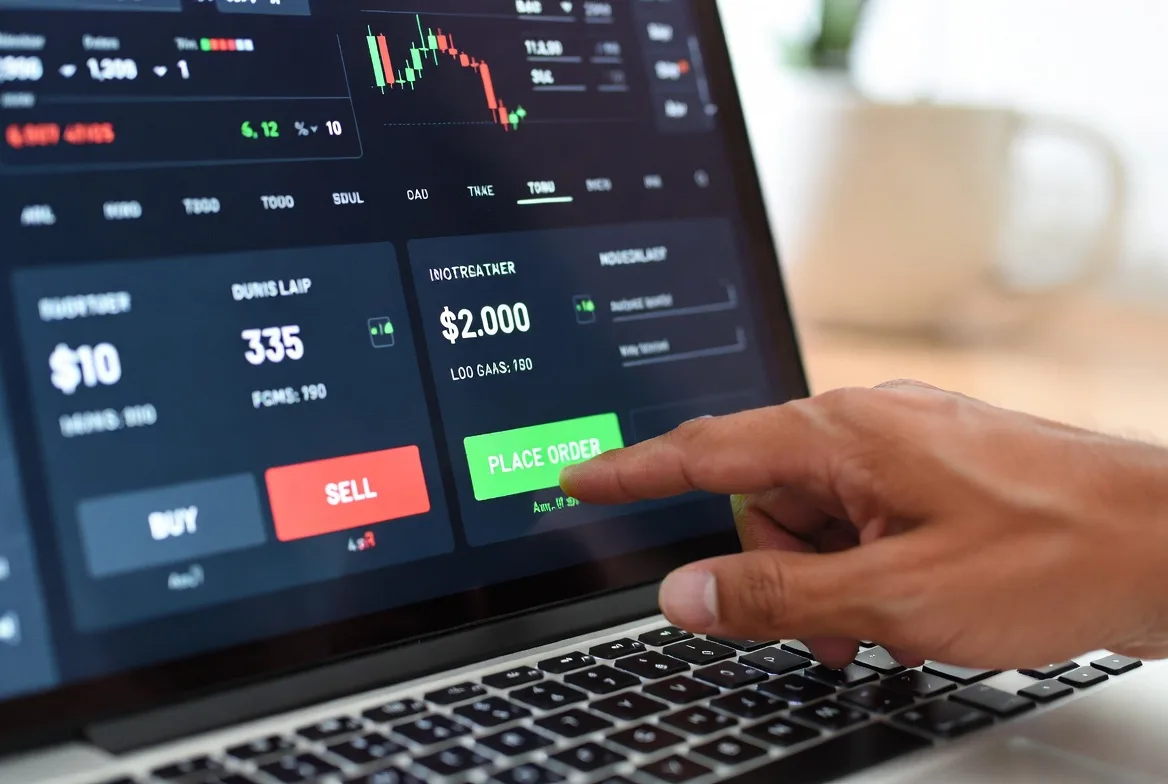
The SEC mandates that every broker maintain minimum capital reserves and submit to regular audits. This framework exists because brokers hold custody of your investments—if they go bankrupt, you need protections. That’s where SIPC coverage enters, insuring accounts up to $500,000.
Full-service brokers assign you an actual advisor who’ll call periodically to discuss your portfolio. Discount brokers give you software and step aside. Both approaches work—it depends whether you want involvement or independence.
Types of Trading Brokers Explained
Brokers split into categories that reflect different business models and target customers. Knowing which type matches your situation eliminates wasted time comparing incompatible options.
Full-Service vs. Discount Brokers
Full-service firms like Morgan Stanley or UBS assign a dedicated advisor to your account. You’ll meet (virtually or in-person) to discuss retirement timelines, college savings, estate planning. Your advisor recommends specific investments, monitors your portfolio continuously, and adjusts allocations when market conditions shift or your circumstances change.
Expect to pay 0.75-1.25% of your account value annually. A $200,000 portfolio costs $1,500-$2,500 per year. Most full-service brokers won’t accept accounts below $50,000, and many set minimums at $100,000 or higher. You’re paying for personalized attention—someone who knows your financial situation and provides proactive guidance.
Discount brokers—Fidelity, Schwab, E*TRADE—charge nothing for stock and ETF trades. You research investments yourself, make your own decisions, and use their platform to execute trades. No advisor calls you. No one reviews your portfolio unless you specifically request (and pay for) that service. Account minimums? Usually zero. You could start with $500 if you wanted.
Which makes sense? If you enjoy researching companies, reading earnings reports, and making investment decisions, discount brokers save you thousands annually. If that sounds tedious or overwhelming, full-service relationships provide expertise worth the cost.

Brokers for Active Traders
Active trading specialists—think TD Ameritrade’s thinkorswim, Interactive Brokers, TradeStation—cater to people executing 50+ trades monthly. They provide tools that casual investors don’t need: Level II order books showing all bids and asks, customizable hotkeys to place orders in two keystrokes, advanced charting with 100+ technical indicators.
Pricing structures differ too. Instead of $0 per trade, you might pay $0.0035 per share with a $0.35 minimum. That’s $3.50 for a 1,000-share order—cheap if you’re trading actively, expensive if you buy 10 shares occasionally. Options contracts cost $0.50-$0.85 each rather than the $0.65 standard at discount brokers.
These platforms also offer margin rates starting at 4.75% for balances exceeding $100,000 (compared to 9-11% at basic discount brokers). Extended hours trading lets you place orders from 7 AM to 8 PM Eastern. Real-time professional data feeds—usually $50-$100 monthly—come free when you maintain $25,000+ balances or hit volume thresholds.
Should you use one? Only if you’re genuinely trading actively. Someone making three trades monthly pays for sophisticated tools they’ll rarely open. But if you’re day trading or managing short-term positions, the specialized features justify any additional costs.
Understanding Trading Broker Fees and Commissions
Headline commission rates hide the real expense picture. Yes, most major brokers now charge $0 for stock and ETF purchases. But that’s one piece of a larger cost structure.
Options trades typically run $0.50-$0.65 per contract. Buying 10 call options costs $5-$6.50. Mutual funds sometimes carry sales loads—upfront charges of 3-5.75% deducted from your investment immediately. A $10,000 purchase with a 5% load means only $9,500 actually gets invested. No-load funds avoid this, but you need to check before buying.
Margin interest becomes significant if you borrow against your portfolio. Rates vary wildly: discount brokers charge 8.5-12% annually for balances under $25,000, while active trading platforms offer 4.25-5.5% for the same amount. Borrow $15,000 at 10% and you’ll pay $1,500 in interest over a year. At 5%, that drops to $750—same loan, half the cost.
Watch for inactivity fees. Some brokers charge $50-$75 quarterly if you don’t execute trades or maintain minimum balances (often $10,000). Paper statement fees add $2-$5 monthly—switch to electronic delivery and skip this entirely. Wire transfers typically cost $25-$50 outgoing (incoming usually free). Transfer your account to another broker? Expect $50-$75 per position, though receiving brokers often reimburse these costs for new accounts above certain thresholds.
Payment for order flow creates hidden costs that are hard to quantify. Your broker receives $0.002-$0.003 per share for sending orders to specific market makers. In theory, this arrangement could result in slightly worse execution prices—maybe $0.001 per share less favorable than best available. For a 500-share purchase, that’s $0.50. Not enormous, but it compounds across hundreds of trades.

Trading Broker Requirements and Account Setup
Opening an account starts with meeting basic eligibility criteria and providing documentation. You don’t need U.S. citizenship—permanent residents and foreign nationals can open accounts by supplying passport copies and proof of address. Some brokers restrict which countries they’ll accept (often excluding certain jurisdictions for regulatory reasons).
Initial deposit requirements vary dramatically. Many discount brokers set no minimum—fund your account with $100 or $1,000, whatever you want. Active trading platforms often require $500-$2,500 to unlock their full toolset. Margin accounts (where you can borrow against holdings) require $2,000 minimum under Federal Reserve rules, though individual brokers frequently mandate $5,000 or $10,000.
You’ll need to provide a government-issued photo ID like a driver’s license or passport. Social Security number or ITIN for tax reporting. Employment information including your employer’s name and your occupation. Financial disclosures covering annual income, net worth, and liquid assets—brokers use this to determine suitability for certain products like options or margin.
Account types affect tax treatment and accessibility. Individual taxable accounts offer complete flexibility—deposit and withdraw whenever you want, but you’ll owe taxes on dividends, interest, and capital gains. Traditional IRAs let you deduct contributions from current-year taxes, with withdrawals taxed as ordinary income after age 59½. Roth IRAs accept after-tax contributions that grow tax-free permanently. Joint accounts automatically transfer to the surviving owner, bypassing probate.
Most applications get approved within 24 hours for straightforward cases. Complicated situations—maybe you have an unusual employment situation or international address—can take 3-5 business days while compliance reviews additional documentation. Funding happens through ACH transfers (free, 3-5 days), wire transfers (often $25, same-day), or check deposits (5-7 days). Many brokers restrict trading until funds fully clear, though some extend limited buying power against pending ACH transfers.
How to Verify Regulated Trading Brokers
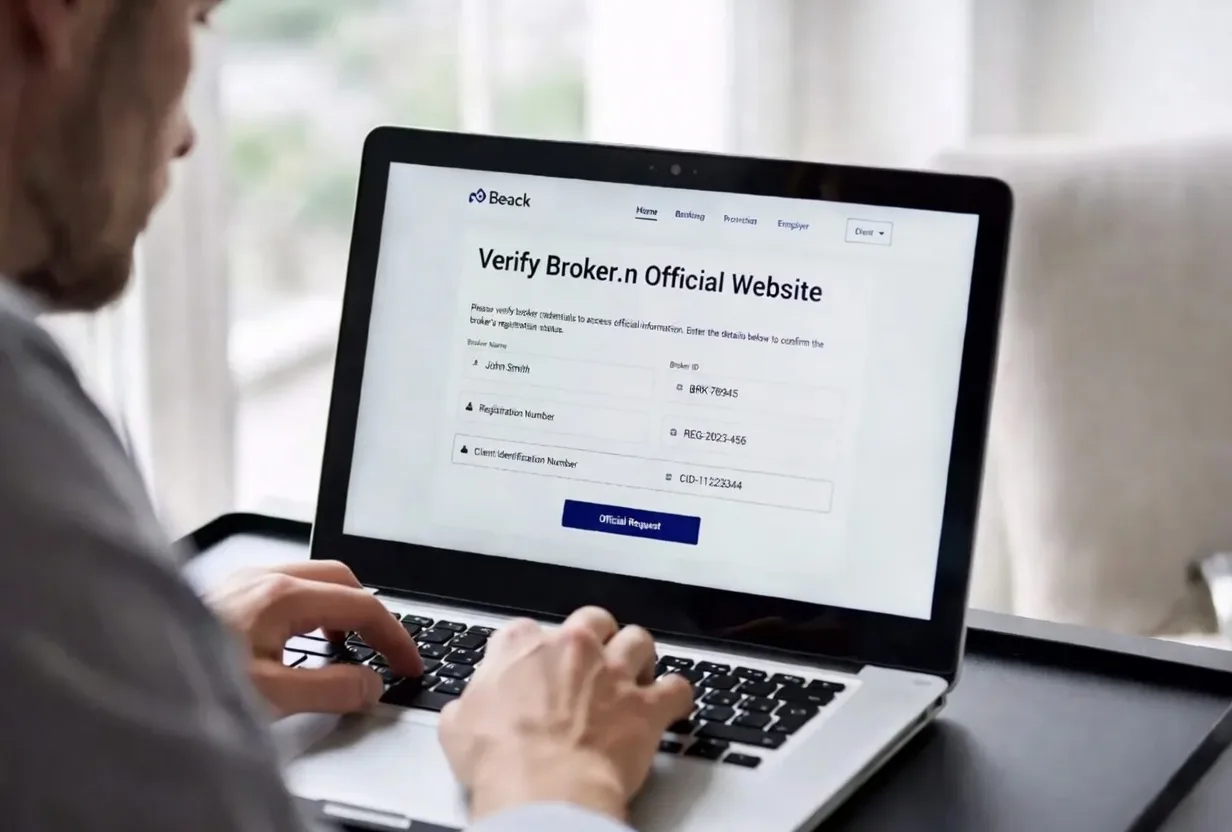
Confirming your broker holds proper licenses protects you under SIPC insurance, which covers up to $500,000 if the firm fails. Verification takes about five minutes using free public databases.
Start at FINRA’s BrokerCheck (brokercheck.finra.org). Enter the firm name to pull up their registration status, CRD number, and complete disciplinary history. You’ll see any customer complaints, regulatory actions, or civil judgments. A few complaints at a large firm with 500,000 clients doesn’t necessarily signal problems—but patterns matter. Ten complaints alleging similar unauthorized trading should raise serious concerns.
Check the SEC’s Investment Adviser Public Disclosure system (adviserinfo.sec.gov) if the firm provides investment advice or portfolio management. Form ADV discloses fee structures, potential conflicts of interest, and any disciplinary events. Some firms register as both broker-dealers and investment advisors, requiring checks in both systems.
Your state securities regulator provides another verification layer. Visit the North American Securities Administrators Association website to find your state’s database. State regulators sometimes catch violations before federal agencies do, so this extra step occasionally reveals red flags missing from FINRA or SEC records.
What should concern you? Firms operating without registration. Representatives who can’t produce valid license numbers when asked. Guaranteed return promises (legitimate brokers always disclose that investments can lose value). High-pressure tactics urging immediate decisions. Requests to wire funds to personal accounts rather than official firm custody accounts.
SIPC protection covers securities and cash held in your account if your broker becomes insolvent—it doesn’t protect against losses from market declines or poor investment choices. Many brokers carry supplemental insurance extending coverage to $250 million through Lloyd’s of London or similar insurers. Check whether your broker offers this additional protection.
Key Factors When Comparing Trading Broker Accounts
Beyond costs and regulatory status, several practical elements determine whether you’ll actually enjoy using a platform or find it frustrating.
Trading platforms range from bare-bones web interfaces handling basic transactions to sophisticated desktop applications supporting multiple monitors and deeply customizable layouts. Before committing funds, open a paper trading account to test the platform. Can you quickly locate the order entry screen? Are watchlists easy to create and monitor? Does the mobile app let you execute complex options strategies or just view positions?
Research tools span basic screeners filtering 15-20 criteria to professional-grade systems scanning thousands of securities across 100+ fundamental and technical metrics. If you analyze balance sheets and income statements, look for platforms integrating 10 years of financial data with comparison tools. Technical traders need charting packages offering 50+ indicators, drawing tools, and the ability to save custom templates.
Real-time news matters for staying informed about earnings announcements, management changes, and macroeconomic events. Premium platforms integrate Dow Jones Newswires, Reuters, or Bloomberg feeds. Free platforms often delay quotes 15-20 minutes—fine for long-term investors, problematic for active traders.
Customer service quality reveals itself when problems occur. Can you reach a human by phone 24/7, or only during business hours? Are representatives based domestically or offshore? How long do you typically wait on hold—two minutes or twenty? Live chat and email work for simple questions, but account issues often require phone conversations. Some brokers assign dedicated service teams to accounts exceeding certain balances.
Educational resources help newer investors build knowledge. Quality programs include 200+ articles covering investing fundamentals, video tutorials demonstrating platform features, and regular webinars analyzing current market conditions. Some brokers offer structured courses with quizzes and completion certificates. Others provide scattered blog posts that barely scratch the surface.
Clients get excited about $0 commissions, then don’t notice they’re being nudged toward mutual funds with 0.75% expense ratios when equivalent ETFs cost 0.03%. On a $400,000 portfolio, that extra 0.72% costs $2,880 annually—far more than old-school $7 commission charges ever did.
Jennifer Martinez
Common Mistakes to Avoid When Selecting a Broker
Certain errors keep appearing, leading investors to switch brokers within months and incur unnecessary transfer fees and administrative hassles.
Choosing based on advertising spend rather than actual features. A broker running Super Bowl commercials isn’t necessarily better than a competitor investing in technology and customer service instead of marketing. Request detailed fee schedules in writing. Test the platform through a demo account. Read independent reviews from actual users.
Ignoring minimum balance requirements that lock away features you want. A broker might advertise sophisticated research tools while restricting access to accounts holding $25,000+. Margin rates and options approval levels often tier by account size—the best terms go to six-figure balances. Know the thresholds before opening an account.
Overlooking international trading capabilities if you want global exposure. Most U.S. brokers offer limited access to foreign exchanges, charging $15-$50 per trade compared to $0 domestically. Some provide American Depositary Receipts as alternatives, but ADRs cover maybe 1,000 companies out of tens of thousands trading on foreign exchanges.
Failing to consider account transfer mechanics before switching brokers later. Full transfers via ACAT typically complete in 5-7 business days for stocks and ETFs. Mutual fund positions can take 3-4 weeks. Certain alternative investments don’t transfer electronically at all—you’ll need to liquidate and repurchase. Some receiving brokers reimburse transfer fees ($100-$150 per account) when you meet minimum deposit thresholds.
Neglecting tax reporting quality creates extra work every April. Better brokers provide detailed gain/loss reports with cost basis tracking across multiple methods (FIFO, LIFO, specific identification). Basic platforms generate simple 1099 forms requiring manual calculations to optimize your tax situation. That extra work might cost you money if you miss deductions or choose a suboptimal accounting method.
Comparison Table: Broker Types
| Broker Type | What You’ll Pay | Opening Minimum | Who Should Use This | What You Get |
|---|---|---|---|---|
| Full-Service | 0.75-1.25% of assets yearly | $50,000-$250,000 | People wanting professional guidance | Personal advisor relationship, proactive portfolio monitoring, comprehensive planning |
| Discount | $0 for stocks/ETFs, $0.50-$0.65 per option | Usually $0 | Self-directed investors comfortable researching investments | Zero-commission trading, basic screening tools, educational content |
| Active Trading | $0.0035/share or volume-based pricing | $2,500-$25,000 | Traders executing 50+ times monthly | Advanced charting, Level II quotes, low margin rates, extended hours |
| Robo-Advisor | 0.25-0.40% of assets yearly | $0-$500 | Hands-off investors wanting automation | Automated rebalancing, tax-loss harvesting, algorithm-driven allocation |
FAQs
A broker executes your buy and sell orders for stocks, bonds, options, and other securities. They provide access to exchanges that don’t accept orders directly from individuals, handle transaction settlement, and maintain custody of your investments. Depending on which type you choose, they might also offer research tools, personalized financial advice, and educational content.
Major discount brokers charge $0 for stock and ETF trades, typically $0.50-$0.65 per options contract, and sometimes $15-$50 for mutual fund purchases. Full-service brokers usually charge 0.75-1.25% of your total account value annually. Additional costs include margin interest (ranging from 4.75% to 12% depending on your balance and broker), inactivity fees ($50-$75 quarterly at some brokers if you don’t trade enough), and wire transfer charges ($25-$50 for outgoing wires).
Many discount brokers require no minimum deposit—you can start with whatever amount you want. Margin accounts require at least $2,000 under federal regulations, though individual brokers often mandate $5,000 or more. Active trading platforms typically want $2,500-$25,000 to unlock advanced features. Full-service brokers usually require $50,000-$250,000 to establish an advisory relationship.
Legitimate brokers must register with the SEC and join FINRA, subjecting themselves to regular examinations and capital requirements. However, fraudulent operations sometimes impersonate registered brokers or operate illegally. Verify registration through FINRA’s BrokerCheck tool and your state securities regulator before opening an account. Properly registered brokers provide SIPC insurance covering up to $500,000 if the firm fails.
Active trading specialists provide advanced charting tools, customizable hotkeys for rapid order entry, Level II market depth data, and margin rates as low as 4.75%. They target clients executing dozens or hundreds of trades monthly. Regular investing platforms emphasize simplicity, educational resources, and $0 commissions on basic transactions—they’re designed for people who trade occasionally and don’t need professional-grade tools.
Check FINRA’s BrokerCheck database to verify registration status and review any disciplinary history. Confirm SIPC membership, which insures customer accounts. Review the firm’s Form ADV if they provide advisory services. Avoid brokers who guarantee specific returns, use high-pressure sales tactics, or request wire transfers to personal bank accounts. Legitimate firms clearly disclose investment risks and maintain transparent fee schedules.
Finding the right broker means matching specific features to how you actually invest rather than chasing promotional offers. Someone trading twice monthly wastes money on active trading platforms charging for tools they’ll never use. A frequent trader loses thousands annually on wider spreads at basic discount brokers lacking the features they need. Start by verifying regulatory status through FINRA and SEC databases—this takes five minutes and protects your assets. Compare total costs including margin rates, inactivity fees, and data subscriptions beyond headline commission rates. Test platforms through demo accounts before moving substantial money. The right broker executes your strategy efficiently and stays out of your way. The wrong choice creates friction that either drains your account or consumes time you’d rather spend researching investments.