

You sell 100 shares of a tech stock on Monday morning and watch the cash appear in your account balance within seconds. Excited about another opportunity, you immediately use that money to buy shares of a different company. Two days later, your broker sends you a violation notice. What went wrong?
The culprit: unsettled funds. Despite seeing the money in your account, those proceeds weren’t actually yours to use yet. This common scenario trips up thousands of investors each year, resulting in trading restrictions and account limitations that could have been easily avoided with a basic understanding of how settlement works.
Understanding Unsettled Funds and the Settlement Period
Unsettled funds are proceeds from a securities sale that have not yet completed the settlement process. When you sell a stock, ETF, or other security, the money shows up in your brokerage account almost immediately—but that doesn’t mean the transaction is complete. The unsettled funds meaning refers to this interim state where the sale is pending final clearance.
The settlement period explained: it’s the time required for the actual exchange of securities and cash between buyer and seller to be finalized through the financial system’s backend infrastructure. During this window, your broker displays the proceeds in your account balance, but they remain restricted for certain uses.
The current industry standard is T+2 settlement meaning, where “T” represents the trade date and the “+2” indicates two business days. If you sell stock on a Tuesday, settlement occurs on Thursday (assuming no holidays intervene). This T+2 settlement meaning applies to most equity securities in the United States and was implemented in 2017, reducing the previous T+3 standard.
Why does settlement take time at all? The delay exists because multiple parties must coordinate: your broker, the buyer’s broker, clearinghouses, and custodian banks all need to verify the transaction, transfer ownership records, and move funds between accounts. While technology has accelerated many aspects of trading, the settlement infrastructure still requires this processing window to ensure accuracy and reduce systemic risk.
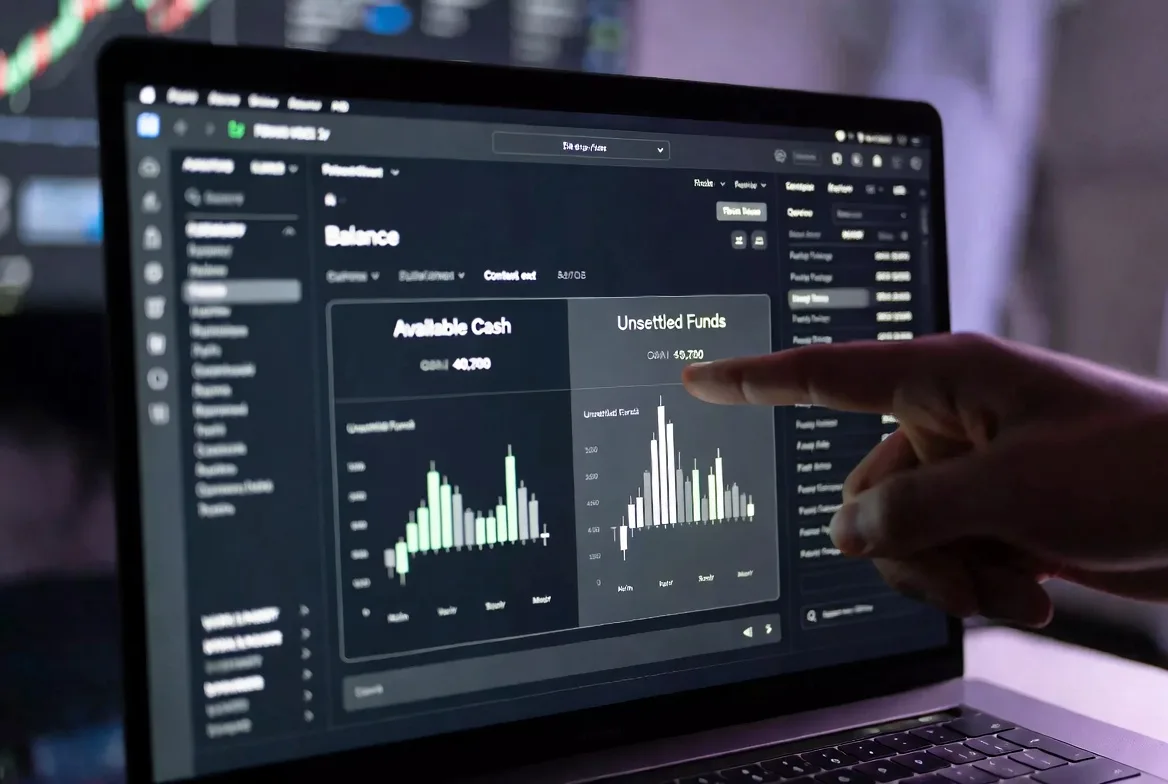
How the Securities Settlement Process Works
The securities settlement process involves several steps that occur behind the scenes after you execute a trade. Understanding this workflow clarifies why you can’t immediately access your funds.
When you place a sell order that gets executed, your broker immediately updates your account to reflect the pending sale. The trade information gets transmitted to a clearinghouse—in the US, typically the Depository Trust & Clearing Corporation (DTCC). The clearinghouse acts as the middleman, essentially becoming the buyer to every seller and the seller to every buyer, which reduces counterparty risk.
During the settlement period, the clearinghouse validates the trade details, confirms that the buyer has sufficient funds, and ensures the seller actually owns the securities being sold. Your broker debits the shares from your account and prepares to receive payment. On the buyer’s side, their broker debits cash and prepares to receive the securities.
On settlement date, the actual exchange occurs: securities transfer to the buyer’s account, and cash transfers to the seller’s account. Only at this point are the funds considered “settled” and fully available for withdrawal or to cover purchases in a cash account.

Trade Date vs Settlement Date Explained
The settlement date vs trade date distinction confuses many new investors because brokerage platforms display information that blurs the line between these two moments.
Trade date is the day you execute your buy or sell order. This is when the price locks in, when you see the transaction appear in your account history, and when most investors mentally consider the deal “done.” Your account balance updates on trade date to show the impact of the transaction.
Settlement date is the day the transaction actually finalizes—when ownership officially transfers and funds become fully available. For stocks and ETFs, this occurs two business days after trade date (T+2). Weekends and market holidays don’t count, so a Friday trade settles on Tuesday.
Here’s a practical example: You sell $5,000 worth of stock on Monday (trade date). Your account immediately shows $5,000 more in cash balance, but this amount is unsettled. On Wednesday (settlement date), those funds officially settle. Only then can you withdraw them to your bank account or, if you’re trading in a cash account, use them to buy another security without risking a violation.

Common Settlement Periods by Asset Type
Different securities have different settlement timeframes. While T+2 applies to most stocks and ETFs, other asset types follow different schedules:
| Asset Type | Settlement Period | Notes |
|---|---|---|
| Stocks & ETFs | T+2 | Two business days after trade date |
| Options | T+1 | One business day after trade date |
| Corporate & Municipal Bonds | T+2 | Same as equities since 2017 |
| Government Securities (T-bills, T-bonds) | T+1 | Faster due to lower risk |
| Mutual Funds | T+1 | Redemption proceeds available next business day |
| Forex (Spot) | T+2 | Standard for most currency pairs |
| Cryptocurrency (on traditional brokerages) | Varies | Some platforms offer instant settlement, others T+2 |
How long do funds take to settle matters significantly for active traders who frequently rotate capital between positions. An options trader working with T+1 settlement has more flexibility than an equity trader dealing with T+2.
The distinction between cash settlement vs physical settlement also affects certain derivatives and futures contracts. Cash settlement means the contract settles with a cash payment reflecting the difference in value, while physical settlement involves actual delivery of the underlying asset. Most stock options use physical settlement (you receive or deliver shares), whereas index options typically use cash settlement.
What Happens If You Trade with Unsettled Funds
Trading with unsettled funds in a cash account triggers violations that can seriously restrict your trading ability. The most common is the free riding violation.
A free riding violation occurs when you buy a security with unsettled funds and then sell that security before the original funds settle. Here’s how it happens:
Monday: You sell Stock A for $3,000 (unsettled funds)
Tuesday: You use that $3,000 to buy Stock B
Wednesday: You sell Stock B for $3,200
Wednesday: Stock A proceeds still haven’t settled (settlement is Thursday)
You’ve essentially bought and sold Stock B without using any settled cash—you “rode” the position for free without committing actual capital. This violates Federal Reserve Regulation T.
The consequences are significant. Your first free riding violation results in a 90-day restriction where you can only make purchases with settled funds already in your account. You must wait for each sale to settle before using those proceeds. This effectively freezes active trading strategies in cash accounts.
A related issue is the good faith violation, which occurs when you buy a security with unsettled funds and then sell it before the purchase itself settles. The difference: you’re not necessarily selling before the original sale settles, but you’re selling the new position before you’ve technically paid for it with settled funds.
Unsettled trades in brokerage accounts are handled differently depending on account type. Margin accounts offer more flexibility because you’re borrowing against your account value, so settlement timing matters less for purchasing power. However, cash accounts strictly enforce settlement rules to comply with regulatory requirements.
After three good faith violations in a 12-month period, your account gets restricted to settled cash only for 90 days. Some brokers impose restrictions after even one violation, depending on their policies.

How to Check and Manage Unsettled Cash in Your Brokerage
Most brokerage platforms clearly display unsettled cash in brokerage accounts, though the exact location varies by broker.
On Fidelity, check your “Balances” tab where you’ll see separate line items for “Cash Available to Trade” and “Settled Cash.” The difference represents unsettled proceeds. Schwab shows “Cash & Buying Power” with a breakdown that includes “Funds Available to Trade” versus “Funds Available to Withdraw”—the latter reflects only settled funds.
TD Ameritrade displays “Available Funds for Trading” and “Available Funds for Withdrawal” on the account summary page. E*TRADE uses similar terminology with “Cash Available to Invest” and “Cash Available to Withdraw.”
Practical tips to avoid violations:
Keep a settlement calendar. If you’re an active trader in a cash account, track your sales and note when proceeds will settle. A simple spreadsheet with trade dates and corresponding settlement dates prevents accidental violations.
Maintain a settled cash buffer. Keep a portion of your account in settled cash that never gets deployed. This cushion lets you take advantage of opportunities without waiting for settlement.
Consider a margin account. Even if you never use margin (borrow money), margin accounts don’t have the same settlement restrictions. You can trade more freely, though you’ll still need to settle trades eventually and may face different violations like margin calls if you overextend.
Use your broker’s violation warnings. Most platforms now display warnings when you’re about to place a trade that could result in a violation. Pay attention to these alerts rather than clicking through automatically.
Plan around settlement when moving money. If you want to withdraw proceeds from a sale, you must wait until settlement. Trying to withdraw on trade date will either fail or potentially create other issues with your available balance.
One common mistake: assuming that depositing new cash into your account will immediately cover an unsettled purchase. Deposits themselves often take several business days to clear, so you could still face violations even after adding money.
Understanding settlement is fundamental to avoiding costly violations. Many investors are surprised to learn that the cash they see in their account isn’t immediately available for all purposes. Settlement periods exist to ensure the integrity of the financial system, but they require traders to plan their transactions carefully.
FINRA Investor Education Foundation
FAQs
No, you cannot withdraw unsettled funds. While your account balance reflects the proceeds from a sale immediately, those funds remain locked until settlement completes. Attempting to withdraw will either be rejected by your broker’s system or, if somehow processed, could create a deficit that triggers violations or fees. Only settled cash can be transferred to your bank account.
A free riding violation happens when you purchase a security using unsettled funds and then sell that security before the original funds settle. The penalty is a 90-day restriction limiting you to trading only with settled cash already in your account at the time of purchase. This means you must wait for every sale to settle before using those proceeds, which severely limits active trading. The restriction applies even if you have ample account value—it’s based on cash settlement timing, not total wealth.
Settlement periods themselves (T+2 for stocks, T+1 for options, etc.) are standardized by industry regulations and apply across all US brokerages. However, brokers have discretion in how strictly they enforce violation rules and what consequences they impose. Some brokers issue warnings before restrictions, while others immediately restrict accounts after a single violation. Margin requirements and how brokers calculate buying power can also vary, affecting your practical experience with settlement even though the underlying timeline is the same.
Margin accounts separate the settlement concern from buying power. Because you can borrow against your account value, you’re not limited to settled cash for purchases. You can sell Stock A on Monday and immediately use those proceeds (even though unsettled) to buy Stock B without triggering a free riding violation. However, you still must eventually settle all trades, and if you exceed your margin borrowing limit, you’ll face a margin call. Margin accounts also come with interest charges on borrowed amounts and additional risks.
In a cash account, you can use unsettled funds to buy stocks, but you cannot sell those stocks until the original funds settle. Selling before settlement creates a free riding violation. In a margin account, you can use unsettled proceeds more freely because you’re effectively borrowing against them. The key distinction: it’s not the buying with unsettled funds that causes problems—it’s selling the new position before the funds you used to buy it have settled.
If you buy a stock on Monday and sell it on Tuesday (before the purchase settles on Wednesday), you’ve potentially created a good faith violation if you used unsettled funds to make the original purchase. The violation occurs because you sold a position before you technically paid for it with settled cash. However, if you bought the stock with settled funds already in your account, selling quickly doesn’t create any settlement-related violation—though you should be aware of pattern day trading rules if you’re making multiple day trades.
Unsettled funds represent a temporary state in the securities trading lifecycle—a period between when your trade executes and when the financial system finalizes the exchange of cash and securities. While modern technology makes trading feel instantaneous, the backend settlement process still requires two business days for most stocks and ETFs.
The distinction matters primarily for cash account holders who must carefully time their trades to avoid free riding and good faith violations. These violations carry real consequences: 90-day restrictions that can halt your trading strategy and force you to wait for settlement after every transaction.
Managing unsettled cash successfully requires awareness of settlement timelines, attention to your broker’s balance displays, and strategic planning around when funds become available. Whether you maintain a settled cash buffer, track settlement dates manually, or switch to a margin account for greater flexibility, understanding how settlement works protects you from preventable restrictions.
The T+2 standard has been in place since 2017, and while industry discussions occasionally surface about moving to T+1 or even same-day settlement, any changes would be announced well in advance. For now, two-day settlement for equities remains the rule, and every investor needs to build their trading approach around this reality.