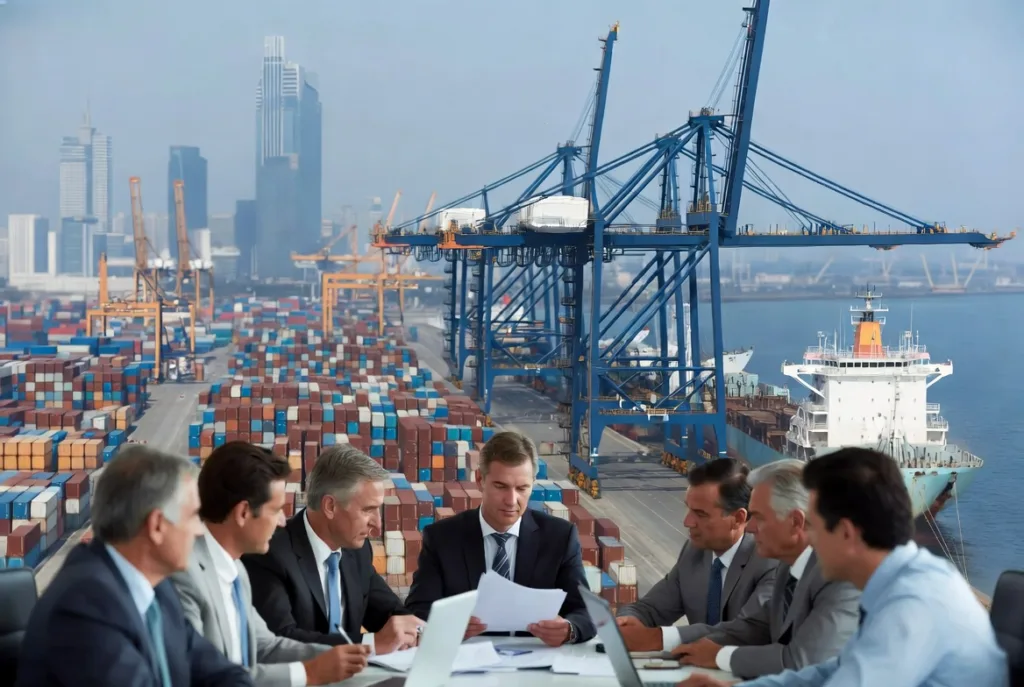
Think about the last time you bought something. Maybe it was a Toyota assembled in Kentucky, or an iPhone manufactured in China but designed in California. These products exist because companies decided to build factories, hire workers, and set up shop thousands of miles from their headquarters. That’s foreign direct investment in action—and it’s fundamentally different from just buying stocks.
When Samsung constructs a $17 billion semiconductor plant in Texas, they’re not placing a bet they can cash out next quarter. They’re committing to decades of operations, training thousands of American workers, and becoming part of the local economy. That’s what separates FDI from the portfolio investments your retirement fund makes.
Foreign Direct Investment Definition and Core Principles
Here’s what matters most: control. FDI isn’t about passive ownership. It’s about having real influence over how a business runs.
The foreign direct investment meaning boils down to this—you’re acquiring a lasting stake in a company outside your home country, plus you get a meaningful say in how it operates. Not just collecting dividends. Actually making decisions.
Most international bodies—the IMF, OECD, World Bank—use 10% voting share ownership as the dividing line. Own at least that much, and statisticians count it as FDI. Own less, and you’re just another portfolio investor.
But percentages alone don’t tell the whole story. Context matters enormously.
Imagine a French luxury brand buys 12% of a small Italian leather workshop and places two executives on the five-person board. That’s clearly FDI—they’re steering strategy, influencing production decisions, maybe even changing suppliers. Now picture a hedge fund buying 15% of Microsoft. Zero board seats. No operational input. Just hoping the stock price rises. That looks a lot more like portfolio investment, even though it crosses the 10% threshold technically.
What actually defines FDI? Several concrete markers:
You own enough to matter. Usually 10% minimum, though many FDI deals involve outright majority stakes. Nestlé doesn’t buy 12% of a Chinese beverage company—they buy 60% or the whole thing.
You’re involved in running things. Appointing managers. Setting quality standards. Making strategic calls about products, markets, and investments. A German automaker opening a South Carolina plant doesn’t just wire money—they send engineers, install their production systems, and train workers in their specific methods.
You’re in it for the long haul. We’re talking years, not trading cycles. Building a pharmaceutical factory takes three years before the first pill rolls off the line. Nobody makes that commitment planning to flip it next quarter.
Real assets cross borders. Cash, yes—but also machinery, patents, technical knowledge, management expertise. When TSMC builds in Arizona, they bring advanced chipmaking technology that didn’t exist in the U.S. before.
That 10% guideline works as a practical rule, but regulators look deeper. They examine the actual relationship. Can the investor influence major decisions? Do they participate in management? A 25% stake in a company with dispersed ownership might grant less real control than 15% of a tightly held family business where you’re the second-largest shareholder.

How FDI Works in Practice
Let’s walk through how this actually happens, using real scenarios.
Step one: Spotting an opportunity. A South Korean battery manufacturer notices that building electric vehicles in Europe is exploding, but local battery production can’t keep up. European automakers are shipping batteries from Asia—expensive, slow, and risky if trade tensions flare. The Koreans see a gap.
Step two: Picking your approach. They’ve got choices. Build a brand-new factory in Poland from scratch? Buy an existing (maybe struggling) European battery maker? Partner with a local firm in a joint venture? Each path has tradeoffs we’ll explore later.
Step three: Moving the money. Say they choose greenfield—building new. They don’t wire €2 billion and break ground tomorrow. The capital flows in stages. First tranche for land acquisition. Second for construction as it progresses. Third for equipment installation. Fourth for initial working capital. These appear in Poland’s balance of payments as FDI inflows over several quarters.
Step four: Getting operations running. Now comes the hard part. They’re hiring Polish engineers and training them in Korean production methods. Installing specialized equipment shipped from Asia. Integrating with headquarters’ supply chain systems. Setting up quality controls that match their global standards. The factory isn’t independent—it’s an extension of the parent company’s operations, following their playbook.
Step five: The ongoing relationship. Once production starts, the ties continue. Profits might get reinvested in expanding the Polish plant, sent back to Korea as dividends, or used to fund a related facility in Germany. The parent company might extend loans to the subsidiary for new equipment. Korean managers rotate in for two-year assignments. All of this counts as FDI activity—not just the initial investment.
Real example from 2024: When Intel announced its €30 billion German fab project, the process took two years before construction even started. Site selection in Magdeburg. Negotiations with federal and state governments over subsidies (€10 billion in public funding). Environmental impact studies. Infrastructure upgrades (the plant needs massive power and water). Recruiting German engineers and technicians. Partnerships with local universities for R&D. Contracts with construction firms. The capital deployment stretched across 2024-2029, with different amounts each year as construction phases completed.
Who’s involved? The parent company (Intel). The German subsidiary being created. Federal and state government agencies. Banks arranging financing. Construction contractors. Equipment suppliers (often from multiple countries). Law firms navigating German corporate law. Consultants handling everything from site assessment to workforce development.
The German entity doesn’t operate independently. It reports to Intel headquarters. Uses Intel’s technology. Follows Intel’s quality standards. Produces chips designed in the U.S. Serves global customers according to Intel’s sales strategy. That integrated control structure defines FDI.
Types of FDI Explained
Horizontal, Vertical, and Conglomerate FDI
Horizontal FDI means doing the same thing you do at home, just somewhere else. Starbucks opens in Shanghai? They’re selling coffee, exactly like Seattle. BMW builds cars in South Carolina? Same cars they make in Bavaria. You’re replicating your business model in a new geography.
Why do this? Sometimes exporting doesn’t work. Shipping German cars to America and paying import duties costs too much. Local production makes sense. Sometimes customers want proximity—fresh bread from a French bakery chain in Toronto tastes better than week-old imports. Sometimes governments create barriers that force local production if you want market access.
The advantage? You already know how to run this business. BMW understands auto manufacturing inside and out. The challenge? Different markets have different tastes, regulations, and competitive dynamics. What worked in Munich might flop in Mexico City.
Vertical FDI extends your supply chain across borders, either backward toward inputs or forward toward customers.
Backward vertical FDI secures your supplies. Apple doesn’t just buy chips from suppliers—they’ve invested in fabrication facilities and partnerships that give them priority access and control over specifications. A Swedish furniture company buying Romanian forests and sawmills ensures stable timber supply at controlled costs.
Forward vertical FDI gets you closer to end customers. A Brazilian steel mill might acquire fabrication shops in Argentina that turn steel into construction materials, capturing the profit margin that used to go to independent buyers.
Why go vertical? Control costs. Secure critical inputs. Guarantee quality. Capture more profit across the value chain. Nike doesn’t manufacture shoes—they’ve invested in contract manufacturers across Vietnam, Indonesia, and China that produce to Nike’s exact specifications. Not quite ownership, but definitely FDI-level relationships with management control.
Conglomerate FDI ventures into completely unrelated businesses abroad. A Chinese real estate developer buying a Hollywood film studio. A Japanese electronics company investing in Brazilian agriculture. These deals make less sense strategically—you’re entering unfamiliar industries in unfamiliar places.
Why would anyone do this? Sometimes it’s pure diversification—spreading risk across unrelated sectors and geographies. Sometimes it’s about deploying excess capital when growth opportunities at home dry up. Sometimes (honestly) it’s about executives’ egos or empire-building instincts.
Conglomerate FDI is much rarer than horizontal or vertical because it’s harder to pull off. You lack expertise in the new industry. Synergies with your existing business are minimal or nonexistent. You’re betting you can manage something you don’t really understand, in a country where you lack experience. That’s a tough combination.
Greenfield vs Brownfield Investment
This choice shapes everything—timeline, costs, control, risk. Let’s break down what each actually means in practice.
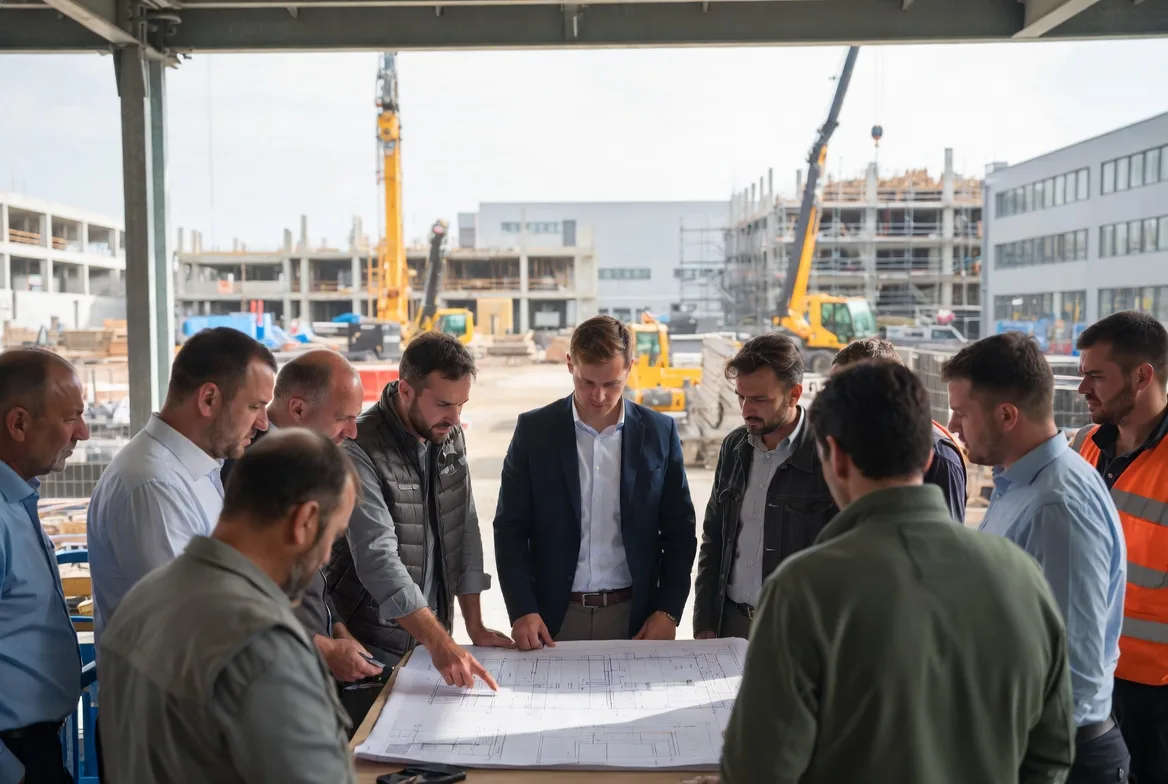
Greenfield investment: You’re building from nothing. Literally finding an empty field (or factory site, office park location, whatever) and constructing exactly what your business needs.
Take Tesla’s Berlin Gigafactory. They bought forested land outside the city, cleared it (amid environmental protests), and built a custom facility designed specifically for electric vehicle production using Tesla’s methods. Every detail—factory layout, equipment specs, workflow design, even the architecture—reflected Tesla’s vision.
What you gain: Total control. The facility matches your operational needs perfectly because you designed it that way. Latest technology throughout. No legacy problems—no outdated equipment, inefficient layouts, or entrenched practices you need to change. You pick the exact location, optimized for logistics, labor access, or proximity to customers. And host governments often throw huge incentives at greenfield projects because they create brand-new jobs.
What you give up: Time. Construction takes years. TSMC’s Arizona fab won’t produce chips at volume until 2025-2027, despite announcing plans in 2020. Risk—you’re building something never tested in this location. Revenue comes way later than if you bought something already operating. And you’re learning the local business environment from scratch—labor markets, suppliers, regulations, culture—without an existing team to guide you.
Brownfield investment: Buying or merging with someone already up and running. Maybe they’re struggling financially. Maybe they’re successful but the owners want to exit. Maybe you’re acquiring a competitor.
When Walmart entered the UK, they didn’t build stores—they bought ASDA, an established supermarket chain with hundreds of locations and millions of existing customers. Instant market presence.
What you gain: Speed. You’re operational immediately. Revenue starts (or continues) from day one. Proven concept—the business model already works in this market. Experienced workforce that knows local conditions. Established supplier relationships. Distribution networks already functioning. Brand recognition with customers. Lower execution risk because you’re buying something demonstrably viable.
What you give up: You inherit everything—the good and the bad. Outdated equipment that needs replacement. Inefficient facilities in wrong locations. Labor contracts that constrain flexibility. Corporate culture that clashes with yours. Systems and processes that don’t match your standards. Integration headaches that can take years to resolve. And you’re paying a premium for the functioning business instead of just construction costs.
The premium issue matters. A Chinese manufacturer evaluating Thai expansion might spend $180 million building a new factory over three years. Or they could pay $240 million to acquire a Thai competitor with slightly older equipment but immediate production capacity and $50 million in annual revenue. Which makes sense depends on strategic urgency, available cash, and integration confidence.
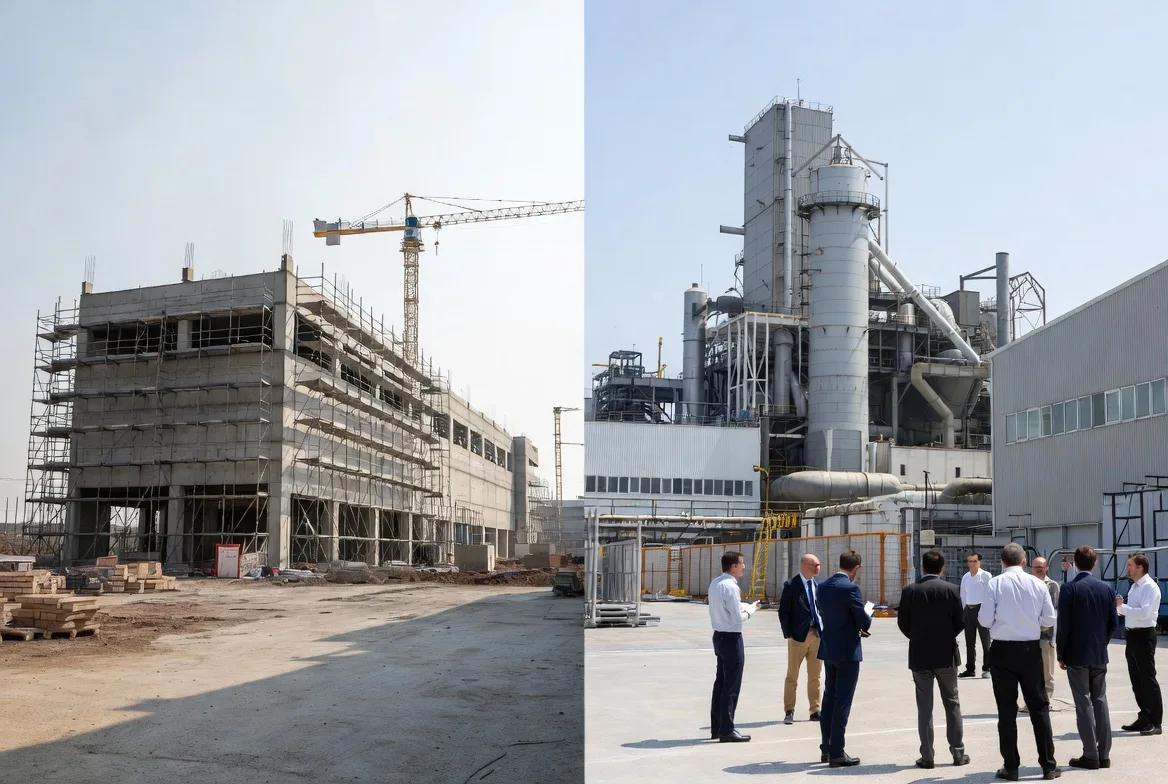
Sometimes companies blend approaches. Buy an existing facility (brownfield) but immediately invest in upgrading equipment and expanding capacity (greenfield characteristics). Or build new (greenfield) while acquiring a local partner’s distribution network (brownfield element).
FDI vs Portfolio Investment
Both move money across borders. Both involve foreigners owning pieces of companies. But they’re fundamentally different animals.
| Feature | FDI | Portfolio Investment |
|---|---|---|
| Level of Control | You’re influencing decisions—board seats, management input, strategic direction | You’re watching from the sidelines—no say in company operations |
| Investment Horizon | Long-term play, usually 5-20+ years; designed to be sticky | Whatever makes sense—might hold for decades or sell next month |
| Ownership Percentage | Typically 10%+ of voting shares; often majority or total ownership | Usually under 10%; spread across many companies for diversification |
| Purpose | Running business operations; building or acquiring productive capacity | Financial returns—dividends and share price appreciation |
| Liquidity | Highly illiquid; selling a factory or subsidiary takes months or years of negotiation | Trade it tomorrow if you want—publicly traded securities move fast |
| Risk Profile | Operational risks (can workers run this?), political risks (will regulations change?), stuck if things go south | Market volatility, currency swings, but you can exit quickly if needed |
| Examples | Volkswagen’s Tennessee plant; Anheuser-Busch buying Mexican breweries; IKEA stores across Europe | Norwegian sovereign wealth fund owning 1.5% of every global stock; pension funds buying international bonds |
Why does this distinction matter so much?
For host countries, FDI brings spillover benefits. When Samsung trains Vietnamese technicians in advanced electronics manufacturing, those skills spread—workers eventually move to other companies or start their own businesses. Technology transfer happens through demonstration effects and labor mobility. A foreign-owned factory requires local suppliers, creating business opportunities and upgrading domestic capabilities.
Portfolio investment provides capital but little else. A foreign mutual fund buying Vietnamese stocks helps companies raise money, sure. But there’s no technology transfer, no management expertise sharing, no training of local workers in new techniques.
Stability differs dramatically too. During the 2025 economic jitters, portfolio investors dumped emerging market stocks and bonds within weeks. Funds exited positions to preserve capital. FDI? Much stickier. Toyota’s not dismantling its Thai factories because of a rough quarter. Those investments represent long-term commitments not easily reversed.
From an investor perspective, the calculations are completely different. A corporation expanding globally needs production capacity, distribution networks, and market presence—FDI delivers that. A pension fund managing retirement money needs diversification, liquidity, and acceptable risk-adjusted returns—portfolio investment fits better.
The lines occasionally blur. A venture capital firm taking a 20% stake in a Brazilian startup crosses the 10% FDI threshold. But if they’re hands-off financially focused investors rather than active managers, it behaves more like portfolio investment. Conversely, a 9% stake with board representation and operational involvement looks like FDI even though it’s technically below the threshold.
Regulators mostly care about substance over form. Do you control decisions? Influence strategy? Participate in operations? Then you’re in FDI territory, regardless of the exact percentage.
Benefits of FDI and Economic Impact
FDI creates ripples—some obvious, some subtle, some taking years to materialize.
What host countries gain:
Start with jobs. When Hyundai opened its Georgia EV plant, they hired 8,000+ people directly. But the impact extends much further—the steel suppliers, the logistics companies hauling parts, the construction firms that built it, the restaurants and services supporting all those workers. Economists estimate manufacturing jobs create 3-5 indirect jobs in the surrounding economy.
Technology and knowledge spillovers might matter even more long-term. Intel’s engineers working in Ireland trained thousands of Irish technicians in advanced semiconductor processes. Some stayed at Intel. Others moved to European tech companies, raising capabilities across the industry. Some started their own firms, creating an entire ecosystem that didn’t exist before Intel arrived in the 1980s.
The demonstration effect amplifies this. Local companies see foreign competitors using advanced logistics systems or quality control methods, then adopt similar practices. Vietnamese textile factories supplying Nike learned to meet stringent quality standards and delivery schedules—capabilities they now use for other international clients.
Infrastructure improvements often piggyback on FDI. A mining company building a railroad to move ore creates transportation capacity benefiting other industries. A tech campus requiring reliable power spurs grid upgrades helping nearby businesses. These public goods outlast the specific investment.
Tax revenues flow from multiple sources—corporate income taxes on profits, payroll taxes from employees, property taxes on facilities, indirect taxes from economic activity. A profitable foreign subsidiary contributes to public budgets just like domestic companies.
Export growth accelerates when foreign investors use your country as a production base for global markets. Mexico’s auto exports exploded after GM, Ford, Nissan, VW, and others built plants there. The country became the world’s seventh-largest vehicle producer, mostly for export. That wasn’t Mexico’s domestic industry growing—it was FDI transforming the country into a manufacturing hub.
Competition effects force domestic firms to improve or die. When foreign retailers entered India with superior supply chains and customer service, local chains had to modernize or lose market share. The survivors became more efficient and customer-focused. Protected monopolies got disrupted (painful for them, beneficial for consumers and the economy).
What source countries get:
Companies access new markets, resources, and cost structures. An American software firm opening an Indian development center taps skilled programmers at lower wages. A Japanese automaker building in Mexico gains duty-free access to U.S. markets under USMCA while reducing production costs.
Profits earned abroad boost parent company earnings and shareholder returns. Apple’s China operations contribute enormously to its overall profitability. Those gains flow back to American investors, employees, and communities where Apple is based.
How FDI connects to economic growth:
The relationship isn’t automatic, but the evidence is pretty compelling for countries that get the conditions right.
Foreign direct investment serves as a catalyst for development when host countries create conditions for knowledge spillovers and linkages between foreign firms and domestic suppliers. The difference between FDI that transforms an economy and FDI that merely exploits cheap labor lies in policy frameworks that encourage technology transfer and local participation.
Dr. Maria Santos, senior economist at the International Finance Corporation
Countries that attracted substantial FDI while simultaneously investing in education and infrastructure—Ireland in the 1990s, Singapore from the 1970s onward, South Korea in the 1980s—experienced explosive growth. Vietnam’s manufacturing-focused FDI strategy contributed to 6-7% annual GDP growth over the past fifteen years, lifting 45 million people out of poverty.
But FDI isn’t a magic bullet. If foreign investment concentrates in extractive industries like oil or mining with minimal local employment and imported equipment, spillovers remain limited. An offshore oil platform employing 200 workers, mostly foreign specialists, transfers little technology to the host economy compared to a manufacturing plant training 5,000 local technicians.
The quality of institutions matters enormously. Countries with strong rule of law, enforceable contracts, and decent governance transform FDI into broader development. Countries with corruption and weak institutions often see foreign investors capturing resources while providing limited benefits.
Timing creates opportunities too. During the 2024-2025 global slowdown, FDI into Southeast Asian manufacturing held steadier than domestic investment, cushioning the employment impact. Foreign-owned factories kept running when local firms cut back, stabilizing incomes and tax revenues.
FDI Flows and Global Trends
Where money’s flowing right now tells you something about where investors see opportunity—and where they’re heading for the exits.
Who’s receiving the most FDI lately?
The United States stayed on top in 2024, pulling in over $350 billion. The scale and sophistication of the American economy attracts investment across every sector—tech companies opening data centers, foreign automakers building EV plants, pharmaceutical firms establishing research facilities, European retailers entering e-commerce.
China remains huge but the trajectory shifted. Inflows dropped from peaks above $300 billion to around $160 billion in 2024 as regulatory uncertainty and geopolitical tensions made investors cautious. Still substantial, especially in consumer goods and EVs, but the growth stopped.
India’s rise has been dramatic—crossing $80 billion in 2024, triple the levels from a decade ago. The combination of a massive domestic market (1.4 billion people), government manufacturing incentives, and companies diversifying away from China created momentum. Electronics, pharmaceuticals, and automotive led the way.
Southeast Asia collectively attracted $230+ billion. Vietnam became the poster child for supply chain diversification, with electronics and textile FDI surging. Indonesia drew investment in resources and manufacturing. Thailand remained a regional production hub. Singapore continued its role as a financial gateway, with enormous flows passing through (some destined elsewhere, some staying).
Mexico hit records—over $35 billion in 2024, driven entirely by nearshoring. American and Asian companies alike built factories to serve the U.S. market from just across the border. Automotive, electronics, and medical devices led the sectors.
Among smaller economies, Poland became Europe’s FDI darling, Ireland maintained its tech and pharma dominance despite tax controversies, and UAE positioned itself as a Middle Eastern hub.
Where’s the money coming from?
The usual suspects still dominate. The United States led outward FDI, followed by Japan (seeking efficiency and markets), Germany (industrial expansion), and the UK (services and finance). China’s outward investment, which exploded in the 2010s, plateaued around $150 billion as authorities encouraged domestic focus and foreign governments increased scrutiny.
What’s shifting and why?
Several forces are reshaping patterns:
Supply chain reconfiguration dominated conversations. “China plus one” became corporate strategy shorthand—maintaining Chinese operations but establishing alternative production capacity elsewhere. Vietnam, India, and Mexico benefited enormously. The shift wasn’t about abandoning China entirely. More about reducing concentration risk if trade wars intensify or another pandemic disrupts logistics.
Nearshoring and friendshoring accelerated. American companies favored Mexico and Canada. European firms looked to Eastern Europe and North Africa. The logic combined lower shipping costs, shorter lead times, reduced tariff exposure, and perceived political reliability. When BMW builds batteries in Hungary rather than Asia, they’re nearshoring. When American semiconductor companies invest in allied countries like Japan and Taiwan rather than China, that’s friendshoring.
Green energy transition created massive new FDI flows. Battery plants sprouted across North America and Europe. Solar panel factories expanded in Southeast Asia. Lithium mining operations attracted investment in Australia, Chile, and Argentina. EV manufacturing plants got announced weekly—$20 billion here, $15 billion there. Countries with minerals critical for batteries saw FDI in both extraction and processing.
Digital infrastructure emerged as another hot sector. Data centers proliferated to meet cloud computing demand and data localization requirements. Southeast Asian nations attracted data center investment as companies needed regional presence to comply with privacy laws. Undersea fiber optic cables, 5G networks, and digital platforms all drew cross-border investment.
Services FDI continued growing as technology made services more tradable and companies wanted local presence in major markets. Financial services, business consulting, healthcare, and education all saw significant cross-border investment.
Restrictions vary wildly:
Almost every country screens foreign investment in sectors touching national security. That category keeps expanding.
The United States uses CFIUS (Committee on Foreign Investment in the United States) to review deals. Recent years saw expanded scrutiny, especially of Chinese buyers targeting tech companies, infrastructure, or anything near military bases. Some deals got blocked outright (Chinese acquisition of U.S. chip equipment firms). Others required mitigation measures (divesting sensitive divisions, limiting information sharing).
China maintains extensive FDI restrictions despite WTO commitments. Foreign ownership caps in sectors from automotive (lifting gradually) to media (mostly closed) to telecommunications (joint ventures required) to finance (limits loosening slowly). Investment from countries sharing land borders—meaning India—requires special approval, effectively screening most Indian FDI.
India’s screening grew more restrictive too, requiring approval for investment from border countries (primarily targeting Chinese capital). The review process became slower and more unpredictable during border tensions. Dozens of Chinese-backed deals got blocked or stuck in regulatory limbo.
Europe introduced coordinated screening mechanisms in 2020. Individual countries maintained their own systems, but with improved information sharing and coordination. Concerns centered on Chinese acquisitions of strategic companies—German industrial firms, Italian defense contractors, Swedish tech startups. The pandemic intensified worries about foreign control of critical suppliers.
Australia and Canada tightened reviews of Chinese investment in mining, agriculture, and infrastructure. Japan rarely blocked deals outright but encouraged transactions it disliked to withdraw through informal pressure.
FAQs
The standard answer is 10% of voting shares, which is what international organizations like the IMF and OECD use for their statistics. But that’s just a statistical convention, not a hard rule carved in stone.
What really matters is whether you’ve got meaningful influence over management decisions. Owning 11% of a small company where that makes you the second-largest shareholder with a board seat? Definitely FDI. Owning 15% of a massive corporation with dispersed ownership and zero operational input? That’s borderline—you cross the statistical threshold but lack the control element that defines FDI in substance.
Some countries use different cutoffs for regulatory purposes. You might see 20% or 25% as triggers for specific reporting requirements or review processes. The 10% guideline gives a useful benchmark, but regulators examine the actual relationship when it matters—like deciding whether to review an investment for national security concerns.
They’re completely different mechanisms serving different purposes, even though both involve money crossing borders.
Foreign aid consists of grants or highly concessional loans from governments or international organizations to support development goals, humanitarian needs, or strategic objectives. The World Bank lends to developing countries at below-market rates to build roads or improve healthcare. USAID gives grants for education programs or disaster relief. Recipients don’t repay grants at all, and loans carry favorable terms—low interest, long repayment periods, sometimes partial forgiveness.
Aid doesn’t create ownership stakes. Donors don’t control how recipient countries operate (they attach conditions, but that’s different from equity ownership). There’s no profit motive—the goal is development, stability, or diplomatic influence, not financial returns.
FDI is purely commercial. Companies invest to earn profits. They expect returns competitive with alternative uses of capital. When Toyota builds a factory, they’re not trying to develop the local economy (though that might happen). They’re trying to make money manufacturing and selling cars. If the investment doesn’t generate adequate returns, they made a bad business decision.
The relationship structures differ completely. Aid creates donor-recipient dynamics with diplomatic and development objectives. FDI creates market-based relationships with performance pressures—the foreign subsidiary needs to succeed commercially or the parent company will restructure or exit.
Neither is inherently superior. They serve different functions and often complement each other. Aid might build infrastructure that makes a country attractive for FDI. FDI creates jobs and tax revenue that reduce aid dependence.
The top recipients shift somewhat year to year based on economic conditions, policy changes, and global investment patterns, but a few regulars dominate.
The United States consistently ranks first or second globally, attracting $300-400 billion annually in recent years. The sheer size and sophistication of the American economy draws investment across every sector imaginable—from tech startups in Silicon Valley to automotive plants in the South to financial services in New York.
China was the other giant for years, peaking above $300 billion, but inflows moderated to $160-180 billion range recently as regulatory uncertainties increased and geopolitical tensions made investors cautious. Still enormous in absolute terms, but the trajectory flattened.
Singapore and Hong Kong punch way above their weight relative to population, functioning as regional hubs and gateways. They register huge FDI flows, though some money passes through to final destinations rather than staying. Both serve as platforms for accessing broader Asian markets.
India climbed into the top tier, crossing $80 billion in 2024—triple the level from a decade earlier. The combination of market size (1.4 billion people), manufacturing incentives, and supply chain diversification drove the surge.
Among European nations, the United Kingdom attracts major inflows despite Brexit uncertainties, especially in services and tech. Germany draws manufacturing investment. Ireland’s favorable tax treatment makes it a European hub for American tech and pharma companies.
Brazil leads Latin America, though inflows fluctuate with political and economic stability. Mexico surged recently due to nearshoring trends, setting records above $35 billion.
Smaller success stories include Vietnam (electronics and textile manufacturing), Poland (becoming Central Europe’s industrial center), and UAE (positioning as Middle East hub).
The rankings depend partly on how you measure. Some metrics count total stocks of accumulated FDI; others measure annual flows. Some adjust for country size; others use absolute numbers. But the names above appear consistently regardless of methodology.