
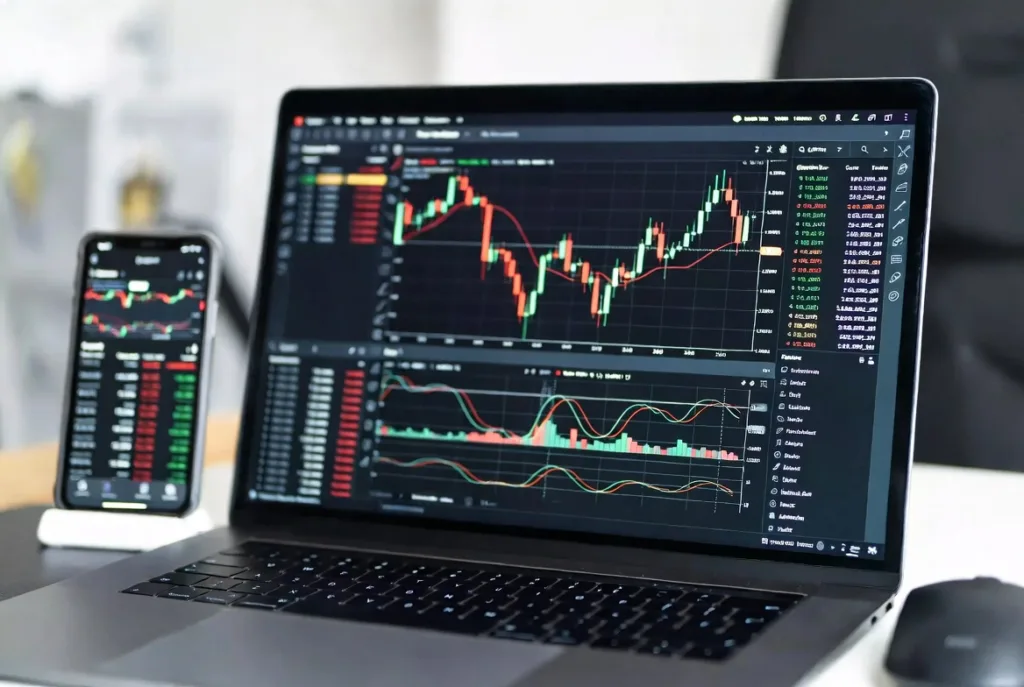
Think of foreign exchange brokers as your gateway to currency trading—they’re the firms that let you buy euros, sell yen, or speculate on the pound without needing millions in capital or a Bloomberg terminal on your desk. For businesses managing international payments and individual traders trying to profit from exchange rate movements, these intermediaries make participation possible.
Here’s something most people don’t realize: the currency market handles roughly $7.5 trillion in transactions every single day (2026 figures). That’s more than all stock markets combined. Yet almost nobody trades directly in this market. Why? The barriers are enormous. You’d need sophisticated technology infrastructure, relationships with major banks, substantial capital reserves, and compliance systems. Brokers absorb these costs and complexities, then package market access into platforms you can open with a few hundred dollars.
Foreign Exchange Broker Definition and Core Functions
So what exactly is a foreign exchange broker? In practical terms, it’s a licensed firm that executes your currency orders—buying and selling on your behalf while providing the tools and infrastructure to make those trades happen.
But the currency broker meaning goes deeper than just processing transactions. These companies build and maintain trading platforms, stream real-time price quotes from multiple sources, offer leverage that amplifies your buying power, and (if they’re good) provide educational resources so you don’t blow up your account in the first week.
When you look at the fx broker definition from a business model perspective, you’ll find two completely different animals. Retail-facing brokers welcome accounts from $100 to maybe $5,000, serving individual speculators and small business owners. Institutional brokers work exclusively with banks, investment funds, and major corporations—think minimum accounts of $100,000 and up, handling single trades worth millions.
The foreign exchange broker role breaks down into several concrete functions:
Liquidity aggregation: Your broker doesn’t just check one price source. They pull quotes from multiple banks, other brokers, and electronic trading networks, then show you the best available bid and ask. This competition among liquidity providers tightens spreads and gets you better execution than approaching a single bank directly.
Platform technology: Currency prices change multiple times per second. You need systems that process orders in microseconds, not minutes. Brokers spend millions building this infrastructure so you don’t have to.
Leverage access: Under current NFA rules, US retail brokers can offer up to 50:1 leverage on major pairs like EUR/USD, meaning you control $50,000 in currency with just $1,000 in margin. (Whether you should use that much leverage is another question entirely.)
Risk controls: Stop-loss orders automatically close losing positions before they wipe out your account. Take-profit orders lock in gains. Margin monitoring alerts you when your account approaches dangerous levels. These tools come standard with any legitimate broker.
Compliance handling: Brokers manage the regulatory paperwork, maintain segregated accounts for client funds, file required reports with the CFTC, and implement know-your-customer procedures. You just trade.
Here’s a real-world comparison: Let’s say your company needs to convert $50,000 into euros to pay a supplier. Walk into a typical bank and you might face a 2-3% markup—costing you $1,000 to $1,500 in unnecessary fees. A specialized currency broker typically charges 0.1-0.5%, saving you over $1,000 on that single transaction.

How Currency Brokers Facilitate Trades
Ever wonder what actually happens in the milliseconds between clicking “buy” and seeing your position confirmed? How currency brokers work involves a surprisingly complex chain of events that most traders never see.
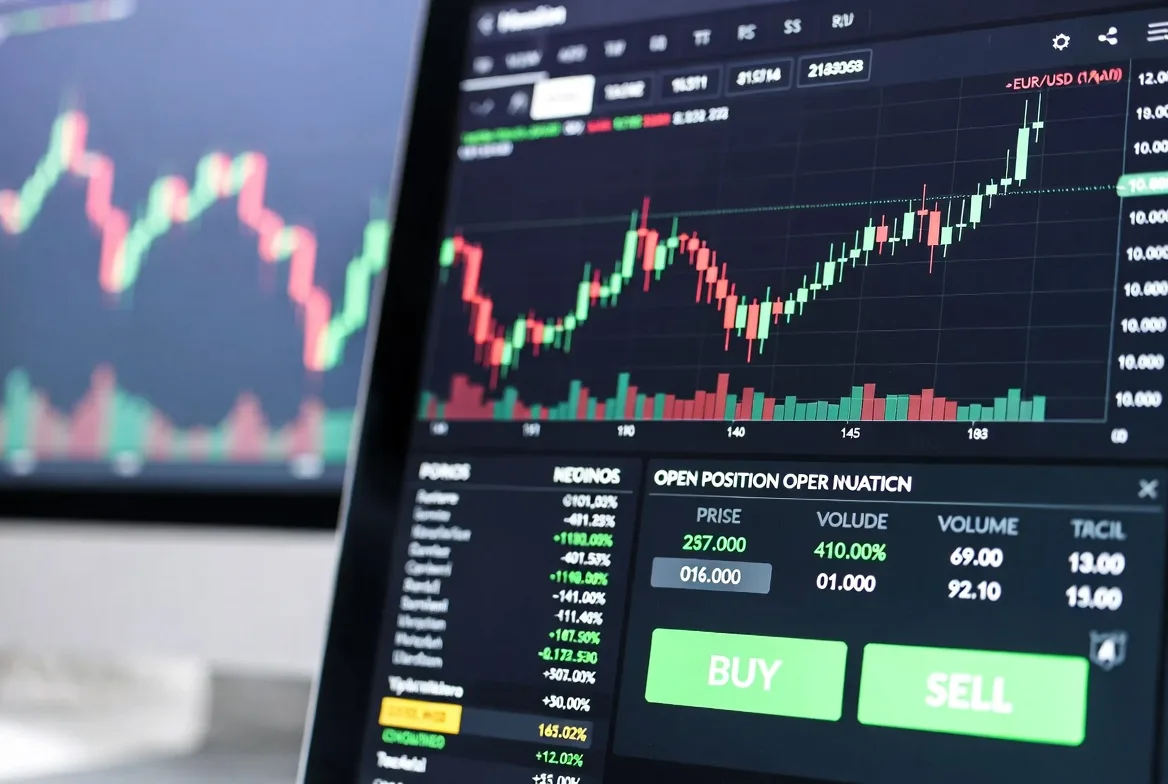
When you submit a market order—let’s say buying EUR/USD—your broker’s system receives the request through their platform, instantly queries their liquidity sources for current quotes, evaluates which provider offers the best price (or decides to fill from their own inventory if they’re a market maker), executes the transaction, and sends back confirmation. The entire sequence typically completes in 50 to 200 milliseconds.
Foreign exchange brokerage operations rely on three distinct execution models, and understanding which your broker uses matters more than you’d think:
Market maker (dealing desk) model: Your broker becomes your direct counterparty. When you buy EUR/USD, they’re the ones selling it to you from their own holdings. They make money from the spread—the gap between their buy and sell prices. This model works fine for small retail orders, but here’s the uncomfortable truth: market makers profit when you lose. If you buy and the price drops, they pocket the difference. That creates an inherent conflict of interest, though reputable firms manage this ethically by offsetting risk with other liquidity providers.
Agency model (STP/ECN): Straight-through processing routes your orders directly to external liquidity providers—no intervention, no dealing desk. ECN (electronic communication network) brokers take this further by displaying a transparent order book where you see other participants’ bids and offers. Your order might get matched with another trader’s opposite order. These models eliminate the conflict of interest but usually mean variable spreads and explicit commissions.
Hybrid approach: Most large brokers use dealing desks for tiny orders (where they can efficiently provide liquidity) and send larger orders to external markets. It’s pragmatic but not always transparent which path your specific trade takes.
Retail Currency Brokers vs. Interbank FX Brokers
The divide between retail and institutional FX brokers isn’t just about client size—it’s fundamentally different businesses serving opposite ends of the market:
| Feature | Retail Currency Broker | Interbank FX Broker |
|---|---|---|
| Who they serve | Individual traders, small-to-medium businesses | Banks, hedge funds, multinational corporations |
| Minimum trade | 1,000 to 10,000 currency units (micro and mini lots) | Usually 1 million units or larger |
| Spread width | 0.5 to 2.0 pips on EUR/USD and other majors | 0.1 to 0.5 pips, sometimes tighter |
| Software platforms | MetaTrader 4/5, proprietary web and mobile apps | Bloomberg terminals, Refinitiv systems, FXall |
| Account minimums | Often $100 to $1,000 | Typically $100,000 to several million |
| Regulatory oversight | Heavy NFA and CFTC scrutiny (retail protection rules) | Lighter regulation focused on institutional markets |
| Leverage in US markets | Capped at 50:1 for majors, 20:1 for minors | Individually negotiated, often much lower or none |
A retail currency broker builds everything around user experience—one-click trading, colorful charts, tutorial videos, demo accounts. An interbank fx broker assumes you already know what you’re doing and focuses on execution quality, credit intermediation, and sophisticated products like currency swaps.
Most individuals couldn’t meet interbank broker requirements even if they wanted to. Beyond capital minimums, these firms conduct credit checks, require extensive legal documentation, and expect you to understand institutional market conventions.

The Role of Spread and Commission in FX Brokerage
Brokers make money three ways, and knowing the specifics helps you calculate true trading costs:
Spread markup: The bid-ask difference. If the actual interbank market shows EUR/USD at 1.0850/1.0851 (meaning banks trade with a 0.1-pip spread), your retail broker might quote 1.0848/1.0853 (0.5-pip spread). They pocket the extra 0.4 pips.
Direct commissions: Instead of widening spreads, some brokers charge flat fees per transaction. ECN brokers commonly charge $3 to $7 per standard lot while offering near-interbank spreads. Whether this saves money depends on your trading volume and typical spread width.
Rollover interest (swap): Hold a position overnight and you’ll pay (or earn) interest based on the rate differential between the two currencies. If you’re long EUR/USD and European rates exceed US rates, you earn interest. The catch? Brokers add their own markup to these calculations, usually 1-2% annually.
Let me show you actual math. You trade one standard lot of EUR/USD (€100,000). With a broker charging a 1-pip spread and no commission, you pay about $10 in transaction costs. Another broker offers 0.2-pip spreads but charges $5 per side ($10 round-turn commission), costing you $12 total. The difference seems trivial until you trade 200 lots monthly—suddenly that’s a $400 difference in monthly costs.
What Does a Foreign Exchange Broker Do for Clients
What does a foreign exchange broker do beyond being an order-taker? The value-add varies enormously between bare-bones operations and full-service firms.
Market analysis: Many brokers employ analysts who produce daily market commentary, economic calendar coverage, and technical analysis reports. They can’t give you personalized investment advice (that requires separate registration as an investment advisor), but they can explain what’s moving markets and highlight key technical levels.
Educational content: Webinars explaining trading strategies, video tutorials on platform features, written guides to fundamental analysis—quality brokers invest heavily here because educated clients tend to survive longer and trade more actively.
Support availability: When you can’t figure out why your order didn’t execute or you need clarification about a platform fee, responsive customer service becomes critical. Top brokers maintain 24/5 support (matching currency market hours) through multiple channels—phone, live chat, email.
Risk management assistance: While you remain responsible for your own decisions, good brokers provide position size calculators, risk-reward analyzers, margin requirement estimators, and sometimes negative balance protection (ensuring you can’t lose more than your account value, even during extreme volatility events).
Corporate FX solutions: Business-focused brokers offer forward contracts letting you lock in exchange rates months ahead, options for hedging with defined risk, and streamlined payment services for regular international transfers. A US manufacturer importing components from Germany might use forwards to eliminate uncertainty about future euro costs, protecting profit margins regardless of currency fluctuations.
The foreign exchange broker role looks completely different for a small business versus an active trader. That manufacturer needs reliable execution on larger transactions, competitive rates, forward contract access, and maybe a dedicated account manager. An active trader needs millisecond execution speeds, comprehensive charting tools, and rock-bottom per-trade costs.
FX Broker Regulation and Oversight in the United States
FX broker regulation in America is unusually strict compared to most countries—which protects you but also explains why many international brokers won’t accept US clients.
Two agencies share oversight responsibilities:
Commodity Futures Trading Commission (CFTC): This federal regulator oversees all commodity futures and options markets, including retail forex. The CFTC sets capital requirements, establishes trading rules, investigates fraud, and enforces penalties against bad actors.
National Futures Association (NFA): Operating as a self-regulatory organization under CFTC oversight, the NFA directly supervises forex dealers through its Forex Dealer Member program. Every US-based retail FX broker must register here.
Your protections under this regulatory framework include:
Substantial capital requirements: NFA members must maintain at least $20 million in adjusted net capital—dramatically higher than requirements in places like Cyprus ($50,000) or offshore jurisdictions (sometimes nothing). This cushion helps brokers survive market stress and client losses.
Fund segregation: Your deposits sit in separate accounts from the broker’s operating capital. If the broker fails, your money should remain intact (though this isn’t an absolute guarantee).
Leverage restrictions: US regulations limit leverage to 50:1 on major currency pairs and 20:1 on minors. Traders sometimes complain this is too conservative compared to offshore brokers offering 200:1 or 500:1, but lower leverage reduces the chance you’ll lose everything in a single bad trade.
Mandatory disclosures: Brokers must clearly explain risks, detail all costs, and regularly report their financial condition. They must also publish statistics showing what percentage of their clients lose money (spoiler: it’s usually 70-80%).
Prohibited practices: US brokers cannot offer deposit bonuses tied to trading volume requirements, cannot “hedge” client positions (they must offset risk externally or carry it themselves), and face restrictions on aggressive marketing tactics.
Regulation isn’t just about following rules—it’s about demonstrating you can handle stress. The NFA registration process filters out undercapitalized operations that might collapse during volatile markets. When the Swiss National Bank shocked markets in 2015 or COVID hit in 2020, you wanted a broker with serious capital reserves and robust risk systems. That’s what the $20 million requirement ensures.
Michael Chen
Watch for these warning signs:
- No NFA registration (verify every broker at NFA.futures.org/BasicNet before depositing)
- Guarantees of profits or claims of risk-free trading (both are impossible and illegal to promise)
- High-pressure sales tactics pushing you to deposit large amounts immediately
- Withdrawal requests that take weeks or require excessive justification
- Customer service that goes dark when you have problems
- Platform outages that mysteriously occur during high volatility
- Your fills consistently worse than prices you see quoted elsewhere
Some US traders get tempted by offshore brokers advertising 500:1 leverage and $10 account minimums. Trading with offshore brokers isn’t technically illegal, but you forfeit all US regulatory protections. If an offshore broker refuses your withdrawal or manipulates prices against you, good luck getting your money back.
How to Choose a Currency Broker
Choosing a currency broker involves more than comparing advertised spreads on a website. Use this framework to evaluate candidates systematically:
| What to Evaluate | Specifics to Check | Why This Matters |
|---|---|---|
| Regulatory standing | Current NFA registration, CFTC compliance, disciplinary history | Determines your legal protections, broker’s financial stability, and your recourse if problems develop |
| Cost transparency | Clear spread or commission structure, all fees disclosed upfront | Hidden costs destroy profitability; opaque pricing often signals deeper problems |
| Platform reliability | Execution stability, order processing speed, mobile functionality, charting capabilities | Technical failures during volatile moves can cost you thousands; poor charts handicap your analysis |
| User feedback | Recent reviews specifically mentioning withdrawals, customer service, execution quality | Real experiences reveal issues invisible in marketing materials |
| Execution standards | Typical slippage on market orders, requote frequency, rejection rates | Even tight advertised spreads become expensive if your fills consistently come at worse prices |
| Market coverage | Major pairs, minor pairs, exotics matching your strategy | Limited selection restricts opportunities and forces you to use multiple brokers |
| Funding options | Bank wires, ACH transfers, processing timeframes | Convenient deposits matter; slow withdrawals often indicate liquidity problems |
| Support quality | 24/5 availability, staff knowledge, response channels (phone, chat, email) | Fast problem resolution prevents costly trading interruptions |
Step-by-step selection approach:
Begin by checking NFA registration. Go to the NFA’s Background Affiliation Status Information Center (BASIC system) and search each broker by name. Review any regulatory actions, customer complaints, or disciplinary issues. This takes five minutes and can save you from fraudulent operators.
Open demo accounts with two or three brokers you’re considering. Spend a week testing each platform’s execution speed, stability during news events, and available features. Place different order types—market, limit, stop-loss, trailing stops—and observe how they execute.
Calculate your actual costs based on realistic trading. If you typically trade EUR/USD with one standard lot daily, compare: (average spread × annual volume in lots) + annual commissions + estimated yearly financing charges. A broker advertising 0.1-pip spreads but charging $10 per lot commission might cost more than one offering 0.8-pip spreads with zero commission, depending on your volume.
Test customer support responsiveness. Send each broker a specific question about their fee structure or a platform feature. Note response time and answer quality. Try contacting them at different times (including weekends when skeleton crews work).
Read client agreements carefully. These contracts contain crucial details about margin call procedures, forced position liquidation, dispute resolution processes, and fee schedules. Most traders skip this step and later discover expensive surprises.
Match broker strengths to your trading approach. Scalpers making fifty trades daily need the absolute tightest spreads and fastest execution. Position traders holding for weeks care more about financing costs and research quality than microsecond execution speeds.
Business users should prioritize differently. Execution milliseconds matter less than competitive rates on $50,000+ transactions, forward contract availability, and having a dedicated account representative who knows your business.
Common Mistakes When Selecting a Foreign Exchange Brokerage
Even experienced traders make broker selection errors that cost them money:
Chasing maximum leverage: An offshore broker offering 500:1 leverage looks attractive until you realize leverage doesn’t create trading skill. It just lets you lose money faster. Most retail traders lose regardless of leverage ratios, and unregulated high-leverage brokers often lack basic protections for your capital. The 50:1 US limit might seem restrictive, but it’s saved countless traders from instant wipeouts.
Focusing only on spreads, ignoring execution: A broker advertising 0.3-pip spreads sounds great until you discover your orders consistently fill 1.5 pips worse than your requested price. That’s 1.8 pips total cost—worse than a competitor offering honest 1-pip spreads with minimal slippage.
Not testing withdrawal processes: Deposits are always easy. Withdrawals reveal a broker’s true character. Some create obstacles—demanding excessive documentation, imposing minimum withdrawal amounts, or processing requests only after multiple follow-ups. Check recent reviews specifically mentioning withdrawal experiences before committing funds.
Getting seduced by bonuses: Before US regulations tightened, offshore brokers offered “100% deposit bonuses” with predatory terms—requiring unrealistic trading volumes before you could withdraw the bonus or even your original deposit. NFA-registered brokers can’t offer these promotions anymore, which actually protects you from these traps.
Trusting website claims about regulation: Scammers build professional-looking sites featuring fake regulatory logos and invented registration numbers. Always verify directly with the NFA rather than believing badges on a broker’s website. Actual verification takes two minutes.
Opening the cheapest possible account: A $10 minimum deposit seems appealing, but brokers with near-zero minimums typically compensate through wider spreads, aggressive upselling, or poor service. A $500 minimum at a reputable broker usually delivers better value than $10 at a sketchy operation.
Ignoring platform compatibility with your devices: If you trade primarily from your phone but choose a broker with a terrible mobile app (or worse, no app at all), you’ll struggle to manage positions effectively. Demo test on the devices you’ll actually use.
Assuming NFA registration guarantees quality: Registration establishes a compliance baseline—it doesn’t mean all registered brokers offer equal service, execution, or platforms. Some NFA members are excellent; others are merely adequate. Registration means they won’t steal your money and they meet minimum standards. It doesn’t guarantee they’re optimal for your specific needs.
Here’s a real scenario I see repeatedly: A new trader discovers an offshore broker offering 200:1 leverage and a $50 deposit bonus. After depositing $500, they read the bonus terms and realize it requires trading 50 standard lots (5 million currency units)—an absurd volume for a $500 account. When they try withdrawing their original $500 after a week of unprofitable trading, the broker demands passport copies, utility bills, bank statements, and a notarized letter explaining the withdrawal purpose. Three weeks and multiple support tickets later, they finally receive their funds. An NFA-registered broker would have processed that withdrawal in 1-3 business days with standard identity verification.
FAQs
Banks provide currency exchange as one service among dozens—checking accounts, mortgages, credit cards, investment accounts. They’re generalists. When you walk in needing to convert $50,000 into euros, you’re getting a 2-5% markup and maybe waiting for a callback from their FX desk. Currency brokers specialize exclusively in foreign exchange. They offer 0.1-1% spreads, leverage for speculation, and platforms built specifically for currency trading. Use banks for occasional needs like vacation money. Use brokers when you’re trading frequently or handling larger business transactions where pricing materially affects your bottom line.
Absolutely. Any retail forex broker operating in the United States must register with the NFA and comply with CFTC regulations. These requirements include maintaining $20 million in capital, segregating client funds from operating accounts, capping leverage at 50:1 for major pairs, and submitting to regular financial audits. Verify any broker’s registration at the NFA website before depositing—it takes two minutes. Offshore brokers serving US clients exist in a regulatory gray zone. Using them isn’t explicitly illegal, but you lose all US regulatory protections and have minimal recourse if problems develop.
Three revenue sources dominate: spread markup (the difference between their buy and sell prices—maybe they pay 1.0850 for EUR but charge you 1.0853), commissions on trades (typically $3-10 per standard lot for ECN brokers), and financing charges on overnight positions (brokers add markup to the underlying interbank rollover rates). Some brokers also earn interest on client deposits held in segregated accounts. Market maker brokers sometimes profit when clients lose, though this conflict of interest is managed through hedging at reputable firms. Contrary to popular conspiracy theories, most legitimate brokers prefer profitable clients—successful traders generate more transaction volume and long-term revenue than blown-up accounts.
Start with NFA registration—non-negotiable. Then evaluate fee transparency (all costs clearly disclosed), platform stability (demo test for at least a week), and customer support responsiveness (test before depositing). Compare total trading costs using your actual typical volume rather than just looking at advertised spreads. Read recent customer reviews, focusing on withdrawal experiences and service quality during problems. If you’re new to FX, ensure the broker offers solid educational resources—webinars, tutorials, demo accounts with realistic practice conditions. Match the broker’s strengths to your approach. Scalpers need razor-thin spreads and microsecond execution. Position traders holding for weeks care more about financing rates and fundamental research quality.
Not realistically. Interbank brokers serve institutions—banks, hedge funds, corporations with substantial FX needs. They require minimum accounts from $100,000 to several million, conduct extensive credit checks, and assume you understand institutional market conventions. The term “interbank” refers to the wholesale market where banks trade with each other in huge sizes. Retail brokers give you access to pricing derived from interbank rates but adapted for smaller transactions. Some “ECN” retail brokers claim to offer direct interbank access, but that’s marketing spin—you’re still trading through a retail intermediary, just one using better pricing sources.
Depends entirely on your trading frequency and size. A typical retail trader making one round-turn trade daily with one standard lot (100,000 units) of EUR/USD pays maybe $10-30 monthly in spreads or commissions. Hold positions overnight and you’ll pay financing charges—usually 2-5% annually on position value, though this can actually be positive income if you’re long the higher-yielding currency. Some brokers charge inactivity fees ($10-50 monthly) if you don’t trade regularly. Business clients making larger but less frequent transactions typically pay 0.1-0.5% of transaction value—still dramatically cheaper than the 2-3% markups banks charge for currency conversion.
Foreign exchange brokers provide the infrastructure that connects regular people to the world’s largest financial market. Without them, currency trading would remain the exclusive domain of major banks and institutions with massive capital and technology resources.
Understanding the differences between retail and institutional brokers, recognizing how execution models affect your costs, and prioritizing regulatory compliance over flashy marketing claims helps you select a broker that aligns with your actual needs rather than a salesperson’s commission structure.
US regulation offers substantial protections through NFA oversight and CFTC rules. Yes, the $20 million capital requirement and 50:1 leverage caps limit your options compared to offshore alternatives. But these restrictions dramatically reduce your risk of broker fraud, manipulation, and failure. For most traders, that trade-off heavily favors working with regulated US brokers.
Effective broker selection requires hands-on testing—open demo accounts, execute various order types, calculate costs using realistic trading volumes, and verify regulatory status independently rather than trusting website claims. The cheapest advertised spreads don’t guarantee value if execution quality suffers or withdrawals take weeks to process.
Whether you’re hedging business currency exposure or actively speculating on exchange rate movements, your broker choice affects your costs, execution quality, and legal protections. Invest time in thorough evaluation before committing capital. Switching brokers later involves paperwork, potential tax complications, learning new platform interfaces, and sometimes withdrawal fees.
The right broker becomes nearly invisible—fast execution, minimal costs, no drama during withdrawals. The wrong broker creates constant friction, eroding your profitability and focus. Choose carefully.