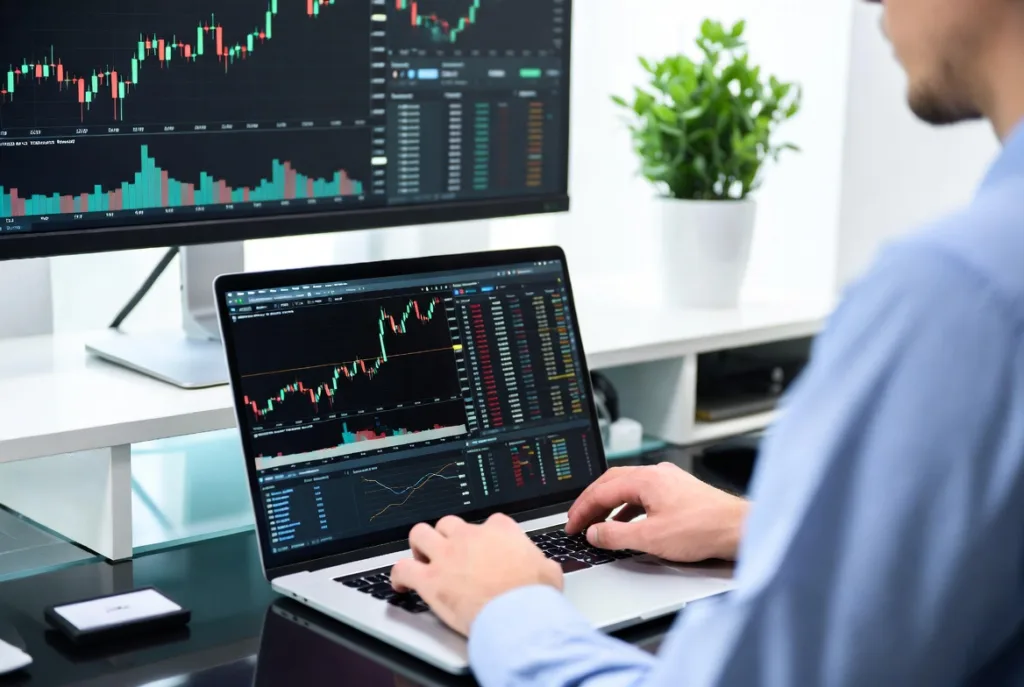
Back in 2003, my neighbor Jim traded tech stocks from his basement. Three Dell monitors covered his desk. He’d call his Schwab broker twice daily to place orders. Market hours owned his schedule—no lunch breaks, no afternoon errands, definitely no vacations during earnings season.
Fast-forward to now. Software executes Jim’s entry signals, manages his stop-losses, adjusts position sizes—all happening while he coaches his daughter’s soccer team or sleeps through the Asian trading session.
This transformation unfolded quickly. Within fifteen years, regular people in Tampa and Boise gained access to algorithmic capabilities that cost hedge funds seven figures in 2000. Interactive Brokers, TD Ameritrade, and similar brokerages democratized technology that once required dedicated server farms. Cloud infrastructure, affordable market data feeds, and broker APIs combined to crack open what was previously an exclusive club.
But let’s be clear: automation solves specific problems while creating new ones. You’re building a rulebook, programming it into software, then letting that software execute without your moment-to-moment input. The system won’t freeze up during a flash crash or chase a stock because everyone on Twitter seems excited—it simply follows instructions. It also won’t recognize when something fundamentally different is happening and the old playbook no longer applies. Whether these tools strengthen or damage your portfolio depends entirely on understanding their capabilities and limits.
Understanding Automated Trading Systems
What is automated trading? You’re delegating execution decisions to software following specific instructions you’ve programmed in advance. Maybe you’ve decided any stock crossing above its 200-day moving average deserves a 2% position allocation. Or perhaps you want to exit immediately when anything drops 3% intraday. The program watches price feeds around the clock and acts the moment those precise conditions materialize.
Compare this to managing trades yourself. You’re watching financial news, refreshing your brokerage app, debating whether this dip represents opportunity or danger. Maybe you miss the perfect entry because you had a dentist appointment. Perhaps you see the signal but can’t bring yourself to click “buy” because CNBC just ran a scary segment about recession risks. Software eliminates this drama—it applies identical logic whether the VIX sits at 12 or 42, whether it’s 9:31 a.m. or 3:57 p.m. on Friday.
Rule-based trading means every decision stems from verifiable conditions. “Exit when RSI exceeds 70” or “Buy after five consecutive declining days”—these instructions contain zero ambiguity. The program won’t suddenly interpret the pattern differently because market commentary shifted.
Systematic trading extends this discipline across your entire approach. How much capital per position? What’s your maximum weekly loss before you pause trading? When do you rebalance between asset classes? Systematic traders document everything and treat portfolio management like structural engineering. Renaissance Technologies and similar quantitative firms operate this way, backtesting strategies against decades of market history before deploying actual capital.
The spectrum spans wide territory. A retired teacher scheduling automatic monthly rebalancing between a total market index fund and municipal bonds qualifies as automation. So does a proprietary desk running neural networks predicting price movements two seconds forward. Both use software to enforce consistent behavior, though one needs basic spreadsheet skills while the other employs PhD physicists.
How Automated Trading Works in Practice
The cycle repeats constantly across three phases: identifying opportunities, sending orders, managing open positions.
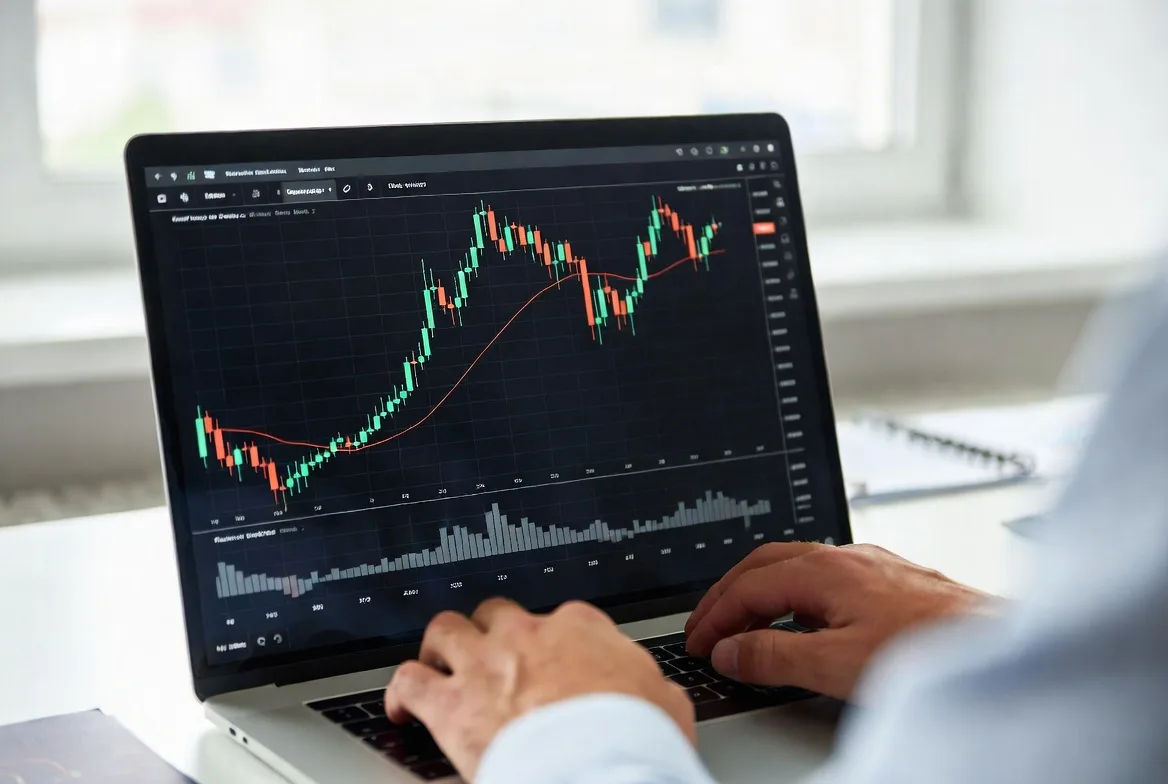
Identifying opportunities starts with data streams. Your system receives price updates, volume figures, maybe alternative information like credit card transaction data or satellite parking lot images. It processes whatever logic you’ve built—moving average crossovers, statistical arbitrage models, sentiment analysis from social media. When every condition aligns, it generates a directive like “Sell 500 shares of XYZ.”
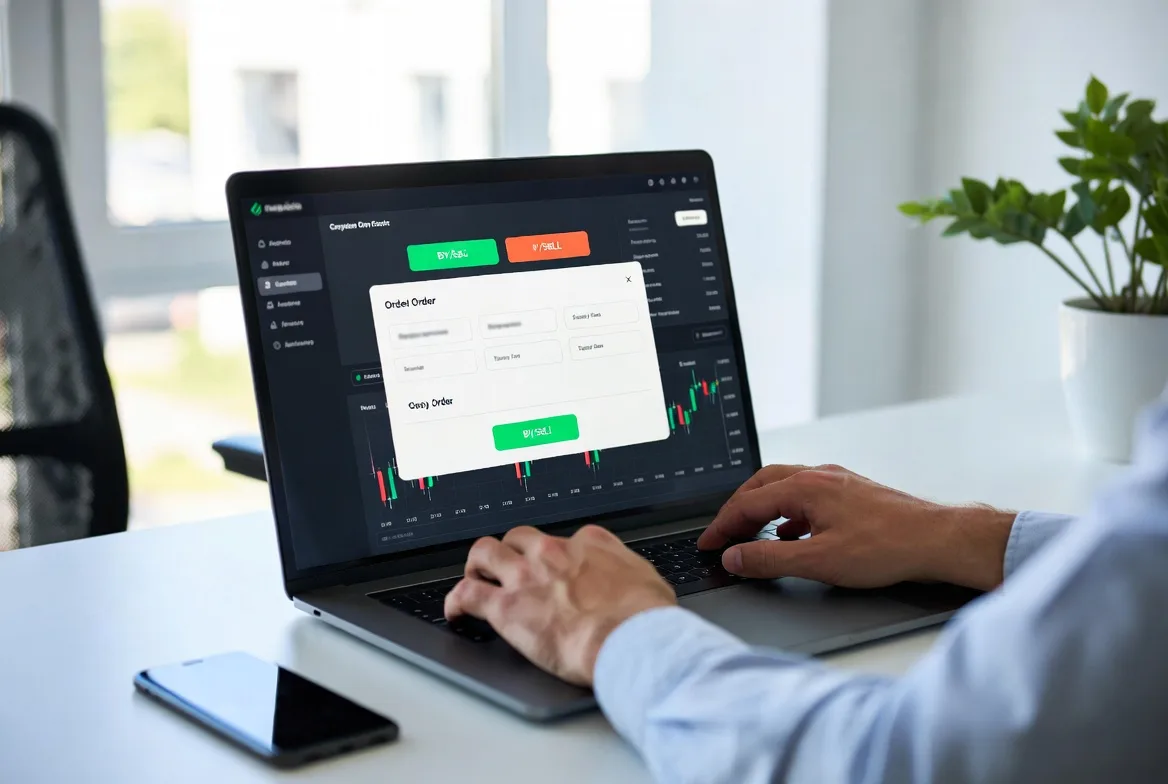
Sending orders happens through your broker’s API (application programming interface). The system transmits specifics: ticker, quantity, order type. Market orders fill immediately at whatever price currently exists—you prioritize certainty over cost. Limit orders let you specify “sell, but only if I can get $52.25 or better”—you’re trading execution speed for price improvement. Stop orders remain inactive until a trigger price awakens them. Each approach balances different execution priorities.
Managing open positions continues after entry. The software monitors your trades against exit logic. Did ABC hit your 10% profit target? Has it violated your 5% stop-loss? Did market-wide volatility spike above your safety threshold? When exit criteria trigger, the system closes positions. Performance metrics accumulate—win rate, average profit per winner, largest single loss, maximum consecutive losers—creating feedback for future adjustments.
Rule-Based vs. Algorithmic Trading Approaches
These terms overlap considerably but highlight different emphases.
Rule-based systems prioritize transparency and reproducibility. “Enter long positions when the 20-period exponential moving average crosses above the 50-period” leaves nothing unclear. Anyone examining your code understands the precise logic. Traders answering to compliance departments or investment committees appreciate this clarity.
Algorithmic trading typically involves more computational sophistication. Algorithms might split a 20,000-share order into 95 smaller pieces, spacing them across three hours to minimize market impact. Or they parse order book depth to detect institutional accumulation patterns. The algorithmic trading meaning encompasses adaptive decision-making responding to real-time market microstructure, not just static conditional statements.
High-frequency trading represents the algorithmic extreme—firms completing thousands of round trips per second, capturing price inefficiencies that vanish in milliseconds. Retail participants never compete at this speed, though they benefit indirectly through tighter bid-ask spreads on liquid securities.
The Technology Behind Automated Systems
Several technology layers work together enabling automation.
Trading platforms provide your interface. MetaTrader dominates retail currency markets. NinjaTrader attracts futures traders. Interactive Brokers’ Trader Workstation spans stocks, options, futures, forex across dozens of global exchanges. These platforms combine charting tools, backtesting engines, and live market connectivity.
Programming languages vary by use case. Python became the quantitative standard—libraries like pandas and NumPy efficiently process enormous datasets. C++ appears where microseconds matter, particularly for high-frequency operations. Proprietary languages including EasyLanguage (TradeStation) or MQL (MetaTrader) let non-programmers construct systems using simplified syntax.
Data infrastructure determines analytical capacity. Real-time exchange feeds run $200 to $500 monthly depending on coverage breadth. Historical tick data capturing every individual transaction requires terabyte-scale storage. Cloud providers like AWS let you backtest against 25 years of intraday data without buying physical server hardware.
Risk controls prevent catastrophic outcomes. Maximum position sizes, daily loss limits, volatility-based circuit breakers—these function as safety mechanisms. Properly designed systems treat risk controls as foundational architecture, not optional features you’ll implement after experiencing losses.
Common Automated Trading Strategies
Approaches range from straightforward to mathematically complex.
Trend-following assumes momentum persists. When Tesla breaks its 52-week high, the system buys, expecting continued strength. When momentum fades—perhaps price crosses below a trailing moving average—the system exits. Trend followers accept frequent small losses during sideways markets, hunting for occasional sustained moves delivering outsized gains.
Mean reversion bets extremes correct themselves. If Walmart historically trades at 24 times earnings but suddenly drops to 16 times without fundamental deterioration, the system buys, anticipating valuation normalization. These strategies profit during range-bound environments but suffer dramatically when genuine trends develop and “temporary” dislocations become permanent shifts.
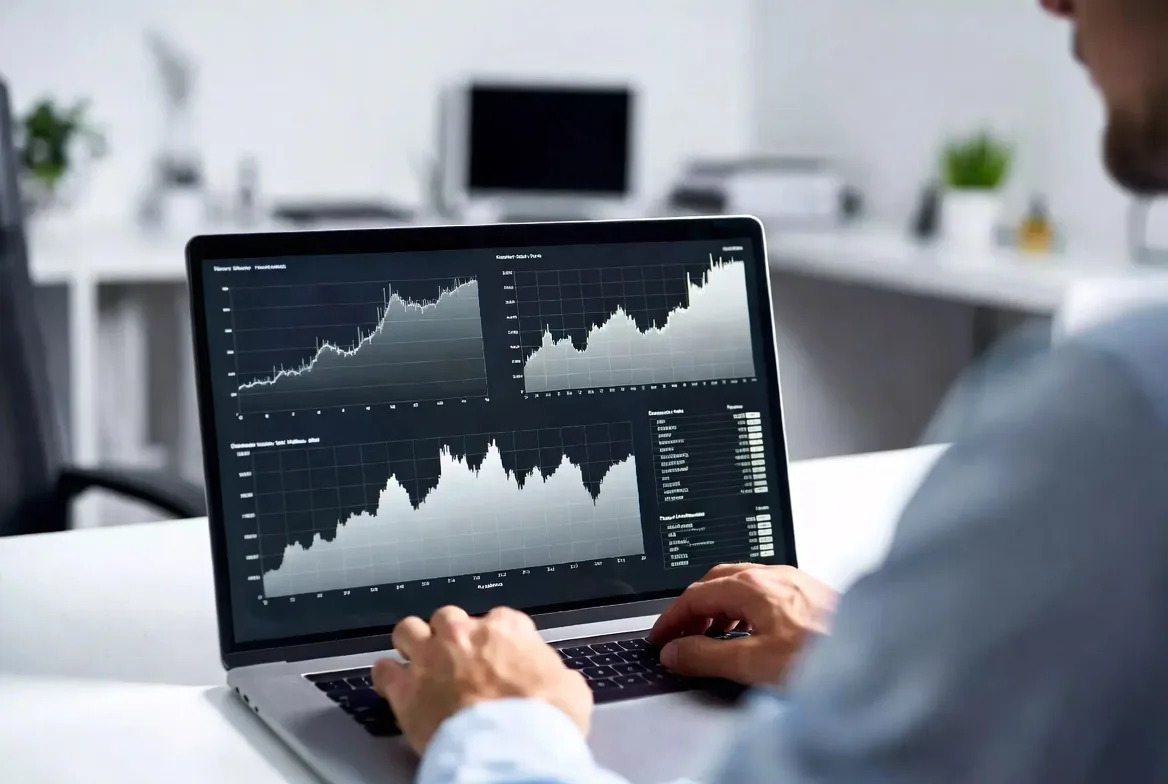
Arbitrage captures price discrepancies between related instruments. Suppose QQQ (the Nasdaq-100 ETF) trades at $380.00 while Nasdaq-100 futures contracts imply fair value at $380.12. An arbitrage system simultaneously buys QQQ and sells futures, locking in the $0.12 difference. Speed matters tremendously—dozens of competing algorithms hunt identical opportunities, and mispricings vanish within milliseconds.
Quantitative trading builds statistical models forecasting returns. A quant system might evaluate 3,000 stocks daily across factors including twelve-month price momentum, earnings estimate revisions, balance sheet strength, and short interest changes. It constructs a portfolio buying high-scoring stocks while shorting low-scoring ones, rebalancing weekly as scores evolve. This methodology demands substantial computing resources and meticulously cleaned historical data.
High-frequency trading operates on sub-second timeframes. HFT firms provide liquidity by continuously posting bid and ask quotes, profiting from the spread. Retail investors can’t compete at this speed, though they benefit from the narrower spreads HFT creates on heavily traded securities.
Real example: A Denver-based trader runs trend systems on commodity futures and equity indices for directional exposure, while simultaneously operating mean reversion strategies on individual biotech stocks. The trend component captures moves in gold or the Russell 2000. The mean reversion piece profits when individual biotechs overreact to FDA announcements, then bounce back toward rational valuations. Combining uncorrelated strategies produces smoother account equity curves than either approach alone.
Types of Automated Trading Systems for Investors
Several categories suit different experience levels and goals.
Retail trading platforms like TradeStation and NinjaTrader enable individuals to develop custom strategies. You’ll write code (or use visual drag-and-drop builders), backtest against historical data, then activate for live execution. These platforms typically charge $100 to $300 monthly plus data subscriptions. They support stocks, options, futures, currencies. Expect a learning period—budget three to six months before you’re comfortable creating and testing strategies independently.
Robo-advisors including Wealthfront and Betterment automate long-term portfolio management. You answer questions about retirement horizon and risk appetite, then the service constructs a diversified ETF portfolio. It rebalances quarterly and harvests tax losses automatically. You’re not building strategies—you’re outsourcing passive index investing. Annual fees typically run 0.25% to 0.50%, cheaper than human advisors but you forfeit customization.
Custom algorithmic systems require hiring software developers to construct proprietary infrastructure. Hedge funds and ultra-high-net-worth families pursue this route, spending $500,000 to $5 million on development. They control every component—data pipelines, execution logic, risk monitoring—but costs make it impractical unless you’re managing nine-figure portfolios.
API-based solutions occupy middle ground. Brokers including Alpaca, Interactive Brokers, and TD Ameritrade offer APIs letting developers connect using Python, Java, or other languages. You write your strategy code, rent cloud server capacity, and manage data subscriptions yourself. This path suits software engineers comfortable handling technical infrastructure.
| System Type | Typical Cost | Technical Skills Required | Customization Level | Tradable Assets | Minimum Capital |
|---|---|---|---|---|---|
| Retail Platforms | $100–$300 monthly | Basic scripting or visual tools | Extensive logic control | Stocks, futures, currencies, options | $2,000–$10,000 |
| Robo-Advisors | 0.25%–0.50% annual | None—online questionnaire | Pre-built models only | ETFs and individual stocks | $0–$500 |
| Custom Development | $500,000+ upfront | Dedicated development team | Complete control | Any tradable security | $5,000,000+ |
| API Integration | $0–$150 monthly plus data | Programming competency | Near-total flexibility | Stocks, options, cryptocurrencies | $500–$5,000 |
Your right choice depends on technical background, available capital, and investment objectives. A professional software engineer might prefer API solutions for maximum flexibility. Someone juggling a demanding career with minimal coding experience probably wants a robo-advisor handling portfolio tasks passively.
Risks and Limitations of Automated Trading
Automation introduces specific hazards absent from discretionary trading.
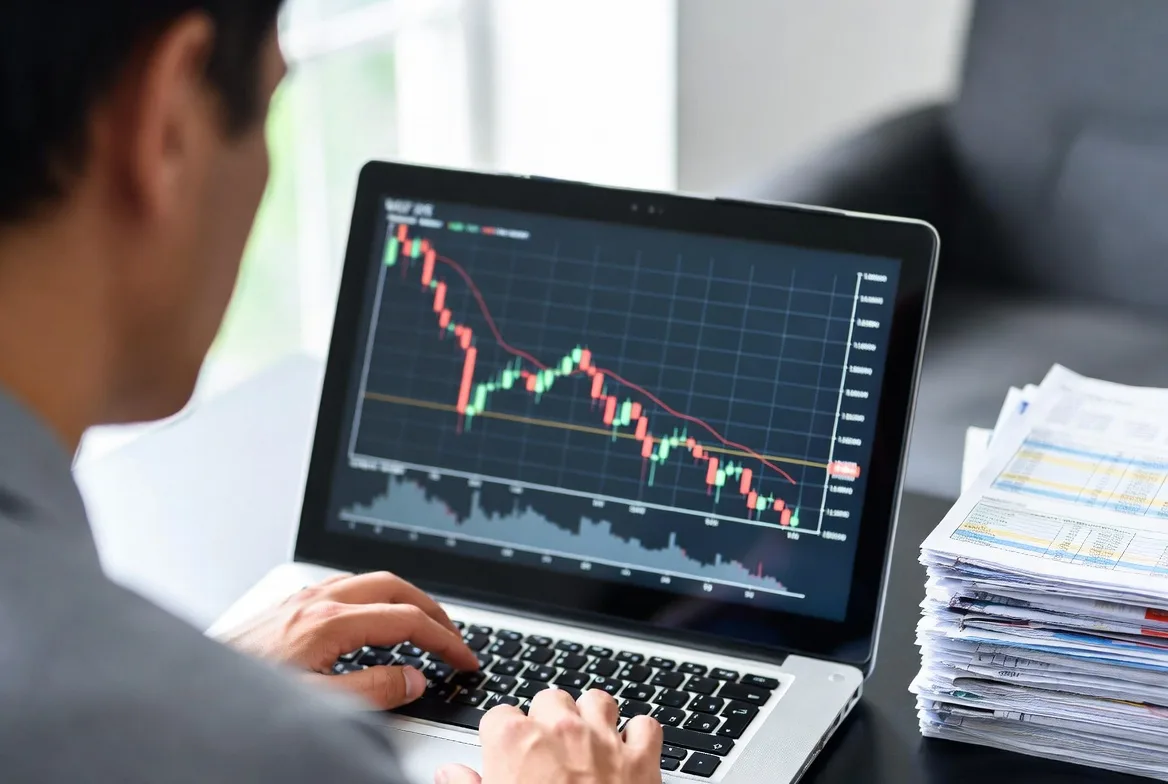
Technical failures can destroy accounts rapidly. A coding mistake might double your intended position sizes or disable stop-loss orders completely. Knight Capital deployed buggy software in August 2012 that executed unintended trades, losing $440 million in 45 minutes. Internet outages, power failures, or broker API downtime can strand you holding open positions with no exit capability.
Over-optimization happens when you adjust parameters until backtests look perfect. You test 80 variations of moving average combinations, discovering that 19-day and 47-day periods produced spectacular returns from 2018 through 2022. Great—except those specific parameters might’ve captured random noise rather than genuine patterns. This curve-fitting produces strategies that worked historically but fail in live markets because they exploited coincidences, not persistent inefficiencies.
Market volatility exposes hidden assumptions. Your backtest assumes fills at midpoint prices with 0.03% slippage. Then geopolitical crisis erupts, and bid-ask spreads explode. Your stop-loss order executes 3% below expectations, magnifying losses. Backtests cannot fully capture how liquidity vanishes during panics.
Lack of human judgment means the system can’t adapt to unprecedented events. Company DEF announces a surprise buyout at 40% premium—every experienced trader recognizes its price behavior just changed fundamentally. Your automated system continues applying pre-programmed logic, potentially losing money because it lacks situational awareness.
Regulatory requirements constrain permissible automation. The SEC prohibits manipulative practices including spoofing (placing orders you intend to cancel to mislead other participants). Pattern day trading rules mandate $25,000 minimum equity if you execute four or more day trades within five business days. Margin regulations cap leverage. Institutional traders face additional scrutiny under Regulation SCI, requiring system testing and outage disclosure.
The most effective automated systems combine rigorous statistical testing with ongoing human oversight. Automation excels at discipline and execution speed. Humans excel at recognizing regime changes. Neither alone suffices—you need both working together.
Dr. Sarah Chen
Getting Started with Automated Investing Systems
Beginners should advance methodically rather than jumping straight into live trading.
Platform selection requires comparing usability, supported markets, and cost structures. MetaTrader 5 works well for currency and CFD trading. Interactive Brokers attracts traders wanting international access across asset classes. Alpaca appeals to Python programmers seeking commission-free US equity trading. Most platforms provide demo accounts—practice environments using simulated money. Spend at least four weeks in demo mode before risking actual capital.
Strategy backtesting separates viable ideas from fantasies. You apply your rules to years of historical data and observe hypothetical outcomes. Watch for common mistakes: neglecting commissions and slippage, assuming instant fills at ideal prices, or testing on insufficient timeframes. A strategy profitable over nine months might’ve caught a lucky streak. Test across multiple years and market environments. Reserve recent data the system hasn’t “seen”—this out-of-sample period provides more honest performance estimates.
Capital requirements vary dramatically. Futures accounts typically require $5,000 to $15,000 meeting exchange margin requirements and handling normal drawdowns. Stock trading in margin accounts falls under pattern day trading rules if you make four or more round trips weekly—that demands $25,000 minimum equity. Some currency brokers accept $500 deposits, though undercapitalization substantially increases blowup risk. Starting smaller forces you to validate whether your system actually functions before scaling up.
Ongoing monitoring never stops. Review performance metrics weekly. Are losing trades clustering during volatility spikes? Has your win percentage declined over the past six weeks? Markets evolve continuously—low-volatility strategies that prospered in 2017 struggled badly during 2020’s wild swings. You’ll need to adjust position sizing, tighten risk controls, or pause trading when live results diverge meaningfully from expectations.
Consider operating multiple small strategies instead of concentrating everything in one approach. This diversification cushions against any single strategy’s failure and produces smoother overall equity curves.
FAQs
Yes—both retail investors and institutions can legally use software for trade execution. The SEC and CFTC oversee markets preventing manipulation and maintaining fairness, but they don’t prohibit automation itself. You must still follow standard regulations like margin requirements and pattern day trader restrictions, but placing trades through algorithms is completely legitimate.
Requirements differ substantially by system type. Robo-advisors often accept accounts below $500. Retail stock platforms might need $2,000 to $5,000 handling normal fluctuations. Futures trading typically demands $10,000 to $15,000 because of margin requirements and contract specifications. Pattern day trading in US equities requires maintaining $25,000 equity. Beginning with smaller amounts lets you validate your methodology before committing serious capital.
No. Systems execute rules consistently, but consistency doesn’t equal profitability. Markets change constantly, edges erode, and technical glitches happen. Transaction costs and slippage eat into returns. Many automated strategies lose money—sometimes because underlying logic was flawed, sometimes because market conditions shifted. You need robust risk management and realistic expectations. Treat automation as a tool for disciplined execution, not a profit guarantee.
Automated trading systems typically execute shorter-term strategies attempting to beat market returns. They might trade futures, options, or individual stocks using technical or quantitative signals. Robo-advisors focus on long-term wealth accumulation using passive ETF portfolios. They charge low fees (0.25% to 0.50% annually) and require zero technical knowledge. Automated trading platforms offer greater control but demand more expertise and active involvement.
Depends which system you select. Robo-advisors need no technical skills whatsoever. Retail platforms like MetaTrader or TradeStation offer simplified scripting languages—non-programmers can learn basics within weeks. API-based solutions and custom systems require solid programming ability in languages like Python or C++. Many traders start with visual strategy builders, then gradually learn coding as they desire more sophisticated capabilities.
Track quantitative metrics: total return, maximum drawdown (largest peak-to-trough decline), Sharpe ratio (return per unit of risk), and win percentage. Compare actual results against backtest projections. If live trading produces losses exceeding historical worst-case scenarios, investigate whether markets have changed or bugs exist in your code. Expect some deviation—backtests can’t perfectly predict future conditions—but significant divergence warrants pausing the system until you understand what’s different.
Automated trading systems deliver speed, consistency, and capacity to execute complex multi-market strategies humans can’t monitor manually. They eliminate emotional biases and operate around the clock—advantages attracting retail traders and institutions alike. Yet automation creates new risks: software bugs, over-fitted strategies, and reduced ability to adapt when markets behave unpredictably.
Your success hinges on matching system complexity to your actual skills and resources. Robo-advisors work for passive investors wanting diversified portfolios managed automatically. Retail platforms serve active traders willing to learn scripting or visual programming. API solutions and custom development fit experienced programmers managing larger accounts.
Start cautiously, test thoroughly, monitor constantly. Markets shift continuously—a strategy dominating last year might struggle next quarter. The most effective approach combines automation’s strengths (speed, consistency, tireless execution) with human judgment recognizing when underlying conditions have changed fundamentally.
Automated trading won’t eliminate risk or manufacture guaranteed profits. But it can enforce discipline, improve execution quality, and free mental bandwidth for higher-level analysis. For investors willing to invest time learning the technology and honestly evaluating their results, automation provides access to sophisticated tools that once belonged exclusively to Wall Street professionals.