
Looking at your first investment decision is like standing in front of a massive buffet without knowing what half the dishes are. You’ve got platforms promising zero fees, accounts with confusing acronyms, and investment products that all sound the same. Here’s what actually matters: you can start building wealth with whatever money you have right now—even if it’s just the cost of a few coffee runs.
This guide cuts through the noise. We’ll walk through the actual investment products you can buy, the account types that hold them, and the platforms that connect you to markets. Got $50? Perfect. Got $5,000? Also perfect. Let’s figure out your next move.
Understanding Your Stock Market Investment Options
Here’s what you’re actually buying when you invest.
When you purchase individual stocks, you’re buying a slice of one specific company. Own Microsoft stock? You’re a tiny shareholder in Microsoft. This gives you the biggest upside potential if you pick a winner, but you’re also putting your eggs in one basket. Tesla could triple—or it could drop 60% in a year. Both have happened.
Exchange-traded funds (ETFs) package hundreds of different stocks into one investment you can trade during market hours. Buy one share of a total market ETF like VTI, and you instantly own tiny pieces of over 3,000 American companies. Most ETFs charge between 0.03% and 0.20% per year in fees—meaning on a $10,000 investment, you’d pay $3 to $20 annually.
Mutual funds do the same bundling job but price once per day after markets close instead of continuously throughout the day like ETFs. You’ll typically find these in workplace 401(k) plans. They come in two flavors: actively managed (a professional picks stocks trying to beat the market) or passively managed (simply tracking an index like the S&P 500). Actively managed funds usually charge 0.5% to 1.5% annually—a massive difference from cheap index funds over time.
Index funds track specific market benchmarks without trying to outsmart them. The S&P 500 goes up 12%? Your S&P 500 index fund goes up about 12% minus tiny fees. They’re available as both ETFs and mutual funds.
Most beginners face this choice: control versus simplicity. Individual stocks let you invest in companies you believe in and understand. But you’ll need to read earnings reports, track industry news, and accept that even great companies sometimes tank. Diversified funds spread your money across dozens or hundreds of businesses automatically. One company implodes? You barely notice because it’s 0.5% of your holdings.

Types of Accounts for Investing in Stocks
The investment vehicle is what you buy. The account is where you put it. And which container you choose changes everything about taxes and access.
Brokerage Accounts
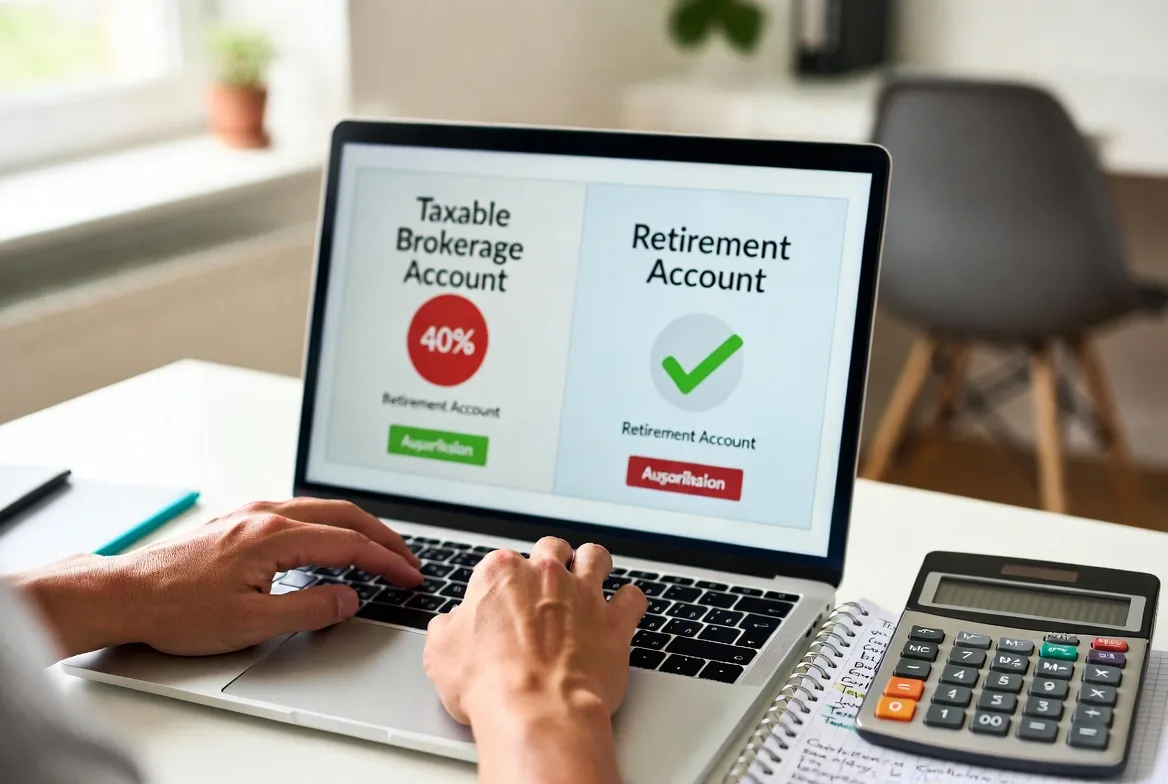
A standard taxable brokerage account is your Swiss Army knife—it does everything. You can put in any amount of money, take it out whenever you want (no age requirements or penalties), and buy almost any stock, ETF, or fund available to the public.
What’s the catch? Uncle Sam wants his share. You’ll pay taxes on dividends the year you receive them. Sell an investment for profit? You’re paying capital gains tax. Hold it less than 12 months and your profit gets taxed like regular income (potentially 35% or more depending on your bracket). Hold longer than a year and you’ll pay the preferential long-term rate—either 0%, 15%, or 20% based on your 2026 income level.
These accounts shine when you’ve already maxed out retirement contributions, when you’re saving for something 5-7 years away (like a house down payment), or when you simply want money you can access at 35 without penalties.
Retirement Accounts
Tax-advantaged retirement accounts are where the government actually helps you build wealth. These include employer plans (401(k)s and 403(b)s) plus individual retirement accounts (traditional and Roth IRAs).
Your employer’s 401(k) or 403(b) lets you contribute pre-tax dollars straight from your paycheck—putting in $10,000 reduces your taxable income by $10,000 right now. Everything grows without annual tax bills. Many employers sweeten the deal by matching part of what you contribute (literally free money). In 2026, you can put in up to $23,500 yearly, or $31,000 if you’ve hit 50. The downside? Pull money out before 59½ and you’ll typically face a 10% penalty plus regular income tax on whatever you withdraw.
Traditional IRAs work the same way but you open them yourself instead of through work. You can contribute up to $7,000 in 2026 ($8,000 after age 50). If you’re already covered by a workplace retirement plan and earn above certain thresholds, your contributions might not be tax-deductible.
Roth IRAs reverse the tax equation entirely. You contribute money that’s already been taxed today, but every penny you withdraw in retirement comes out tax-free—no taxes on decades of growth. This makes Roths incredibly powerful for younger investors likely to earn more later. There’s an income ceiling though: single filers making over $165,000 in 2026 can’t contribute directly (though backdoor conversions remain a workaround).
Timeline drives your account choice. Need the money before retirement? Taxable brokerage avoids early withdrawal penalties. Building for age 65 and beyond? Retirement accounts should be your first stop for those tax benefits and any employer match you’d otherwise leave on the table.
The stock market is a powerful wealth-building tool, but only if you actually get in the game. The biggest mistake isn’t picking the wrong investment—it’s never starting at all.
JL Collins
How to Access the Stock Market Through Online Platforms
You’ve picked your account type. Now you need somewhere to actually make trades happen.
Traditional online brokers (Fidelity, Charles Schwab, E*TRADE, Interactive Brokers) let you direct every decision yourself. They eliminated stock and ETF trading commissions years ago—now they compete on tools, customer service, and educational content. You’ll do your own research and execute your own trades. This fits investors comfortable making their own decisions and willing to spend time learning.
Robo-advisors (Betterment, Wealthfront, Schwab Intelligent Portfolios) handle everything for you. Answer some questions about when you’ll need the money and how you feel about risk. They build a diversified ETF portfolio tailored to your answers, automatically invest new deposits, and rebalance when needed. Expect to pay around 0.25%-0.50% of your account balance each year. It’s hands-off investing with institutional-quality portfolio management.
Direct stock purchase plans let you buy shares straight from certain companies without a broker middleman. This was more popular before commission-free trading became standard. Now these programs offer less flexibility and fewer companies participate.
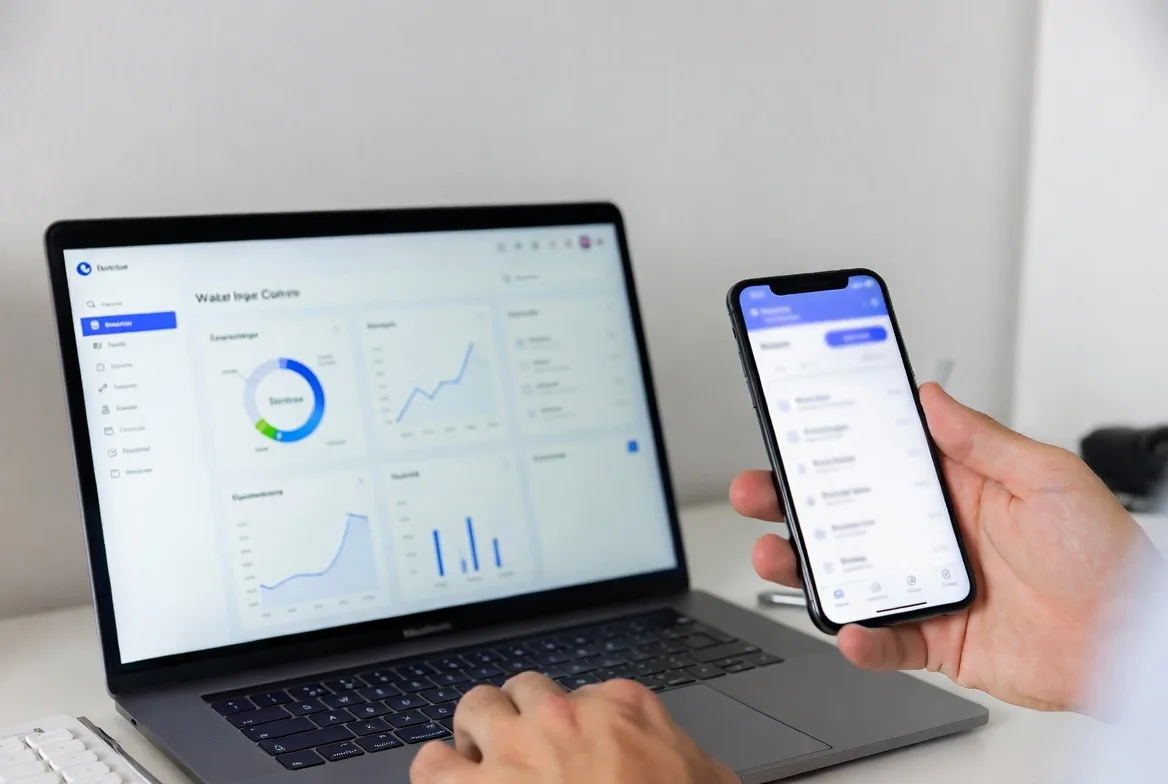
Mobile-first apps like Robinhood, Webull, and Public target smartphone users with streamlined, modern interfaces. They’re legitimate platforms, but some design choices encourage frequent trading (which usually hurts returns). They work fine if you have the discipline to stick with your strategy.
Here’s how the major platforms stack up for newer investors:
| Platform | Account Minimum | Stock/ETF Commissions | Available Accounts | How Beginner-Friendly | Fractional Share Trading |
|---|---|---|---|---|---|
| Fidelity | $0 | $0 | Taxable, IRA, 401(k) | Very approachable | Yes |
| Charles Schwab | $0 | $0 | Taxable, IRA, 401(k) | Very approachable | Yes |
| Betterment | $0 (need $10 to invest) | 0.25% yearly on balance | Taxable, IRA | Easiest option | Automatic with all portfolios |
| Wealthfront | $500 | 0.25% yearly on balance | Taxable, IRA | Easiest option | Automatic with all portfolios |
| Robinhood | $0 | $0 | Taxable, IRA | Fairly simple but easy to overtrade | Yes |
Your choice depends on how much hand-holding you want. Comfortable doing research and picking your own investments? Go with an established online broker. Want someone else managing the details? A robo-advisor removes the guesswork. Most platforms now work seamlessly on phones, offer solid educational libraries, and provide responsive help when you need it.
Passive vs Active Approaches to Stock Investing
This decision shapes how much time you’ll spend investing and what returns you’re likely to see.
Passive investing means buying diversified funds that track broad market indexes and holding them long-term. You’re not trying to outsmart anyone—just capturing whatever the overall market returns. Your main tools are index ETFs and mutual funds tracking benchmarks like the S&P 500, total US market, or global indexes. Maybe you’ll rebalance once or twice a year to maintain your target mix. Otherwise, you’re ignoring the day-to-day noise.
Why this works: practically zero time commitment, rock-bottom fees (many index funds charge 0.03%-0.10% per year), and historically solid results. The S&P 500 has averaged roughly 10% annual returns over the past century through wars, depressions, crashes, and everything else. Passive investors capture these market returns while spending their time on careers and family.
Active investing involves picking individual stocks or actively managed funds, attempting to beat market averages. You might analyze company financials, follow industry trends, or time market swings. This requires constant research, news monitoring, and frequent trading decisions.
Here’s the hard truth: somewhere between 80-90% of professional fund managers fail to beat their benchmark indexes over 10-year stretches, according to SPIVA scorecards. And that’s before taxes. Individual investors face even steeper odds given emotional biases, higher trading costs, and less time for research than full-time professionals.
That doesn’t make active investing worthless. Some people do outperform consistently, and there’s genuine value in understanding the businesses behind your investments. The real question is whether you have the time, analytical skills, and emotional discipline active investing demands. Be brutally honest with yourself.
Many investors split the difference—maybe 75% in passive index funds capturing broad market returns, with 25% in individual stocks they’ve thoroughly researched. This gives you most of the market’s gains while letting you scratch the active investing itch.
For first-timers? Start passive. You can always add active elements later once you’ve built a foundation and developed your analytical muscles. The data overwhelmingly favors low-cost index funds for people just getting started.
Getting Started with Limited Funds
The myth that investing requires thousands of dollars up front keeps more people out of the market than anything else. Reality in 2026 looks completely different.
Fractional shares changed everything. You don’t need $450 for a full share of an expensive stock anymore. Got $50? You can buy 0.11 shares. Your fractional ownership grows exactly like full shares—the stock rises 15%, your fractional piece rises 15%. Most major brokers added this feature in recent years, meaning you can build a genuinely diversified portfolio with whatever you can spare.
Zero minimums are standard now. Fidelity, Schwab, E*TRADE, and others let you open accounts without depositing anything. A few robo-advisors require something ($500 at Wealthfront), but Betterment will start investing with just $10 in your account.
Dollar-cost averaging fits perfectly with smaller budgets. Instead of trying to save up a big lump sum or time the “perfect” market entry, invest a fixed amount regularly—$75 every payday, $200 monthly, whatever works. This averages out price swings over time and eliminates the pressure of picking entry points. Set up automatic transfers and it becomes completely effortless.
Micro-investing apps like Acorns round up purchases to the nearest dollar and invest the difference. Buy coffee for $4.50, they invest $0.50. These tiny amounts accumulate slowly and build the investing habit. Just watch fees carefully—a $3 monthly charge on a $150 account equals 2% annually, which is way too high.
Starting amount matters far less than starting early. Someone investing $100 monthly from age 25 to 65 (assuming 9% average returns) ends up with roughly $470,000. Wait until 35 to start investing $200 monthly? You’ll accumulate around $370,000 by 65. The decade head start with smaller amounts crushes the larger contributions started later. Compound growth rewards early starts regardless of initial size.
Some practical tips when you’re working with smaller amounts:
- Stick with broad index ETFs initially rather than individual stocks—you need diversification more than anyone
- Automate monthly deposits so you’re consistently investing instead of waiting for “extra” money
- Think in percentages, not dollars—10% growth is 10% whether you have $100 or $100,000
- Skip platforms charging monthly subscription fees until your balance makes the percentage cost reasonable (less than 0.5% yearly)
- Check your portfolio monthly at most; daily checking invites emotional decisions based on meaningless short-term swings
Common Mistakes First-Time Stock Investors Make
Learn from these common stumbles instead of experiencing them yourself.
Poor diversification causes more losses than anything else. Putting everything into three hot tech stocks or one booming sector feels smart when prices climb. Then earnings disappoint, regulations shift, or macro trends change, and concentrated bets can crater 50% or more. Even professional analysts struggle to predict individual winners consistently. Spreading money across hundreds of companies through diversified funds protects you when individual holdings stumble.
Following last year’s winners rarely works out. Whatever sector or fund dominated recent headlines has usually already made its big move. Growth stocks crush everything for years, then value stocks have their moment, then international markets surge. By the time you hear about exceptional performance, you’re often buying at inflated prices right before the rotation. This leads to buying high and panic-selling low when trends reverse.
Overlooking fees seems minor until you run the long-term math. A mutual fund charging 1% annually versus an index fund charging 0.04% might not sound dramatic. But over 30 years, that difference can consume 20-25% of your potential wealth. Always check expense ratios. The average actively managed fund charges around 0.66% while good index funds charge 0.03%-0.05%. That gap compounds devastatingly.
Emotional decision-making destroys more portfolios than crashes. Markets drop 20%, fear takes over, you sell everything “to stop the bleeding.” You’ve locked in losses and missed the recovery that typically follows downturns. Same thing happens in reverse—markets surge, euphoria builds, you pour money in at peaks right before corrections. Successful investors stick to their plan through volatility. If checking account balances daily makes you anxious or impulsive, check quarterly instead.
Ignoring tax efficiency costs real money unnecessarily. Sell a stock in your taxable brokerage after holding it 11 months? You’re paying short-term capital gains at ordinary income rates—potentially 32% or higher. Wait one more month for long-term treatment and you might pay 15% instead. Understanding which accounts to use for different investments matters too.
Skipping rebalancing lets your portfolio drift away from your intended risk level. Stocks have a great run and suddenly you’re 85% stocks when your target was 70%. Now you’re taking more risk than you planned. Selling some winners to buy laggards once or twice yearly keeps your allocation on track and forces a disciplined “buy low, sell high” approach.
First-time investors get plenty of grace for learning. But reckless moves—panic-selling in crashes, chasing bubbles, ignoring basic diversification—can set you back years. Take time to understand what you own, stick with your long-term plan, and avoid decisions driven by fear or excitement.
FAQs
Not even close. Most brokers have eliminated account minimums entirely and offer fractional shares, meaning you could literally start with $5. Yes, larger amounts compound to bigger totals over time—that’s just math. But someone investing $50 monthly starting today will build significantly more wealth than someone waiting five years to invest $100 monthly. The habit and time matter more than the initial amount. Start with whatever you can consistently invest without stressing your budget.
ETFs make more sense for most people starting out, especially broad market index funds. You get immediate diversification across hundreds of companies, need zero research skills, and pay minimal fees. Individual stocks require you to read financial statements, understand competitive dynamics, and accept that even great companies sometimes drop 30-40% when execution stumbles or conditions shift. Nothing wrong with owning individual stocks eventually, but they probably shouldn’t be your entire approach. Many successful long-term investors never buy individual stocks and build substantial wealth with diversified funds alone.
Instead of needing to buy whole shares, fractional shares let you purchase partial ownership. Say a stock trades at $800 per share but you only have $160 to invest—you can buy exactly 0.2 shares. If the stock rises 10%, your fractional holding rises 10% too. This opens up expensive stocks to small investors and lets you invest precise dollar amounts ($100 across five different stocks) rather than whatever whole-share math allows. Most major platforms added this feature over the past few years.
Passive wins for most beginners. It demands minimal time (maybe an hour quarterly to rebalance), costs very little (good index funds charge 0.03%-0.10% yearly), and historically delivers better results than most active investors achieve. You buy diversified index funds and hold them through ups and downs. Active investing—picking individual stocks or timing market moves—requires substantial research time, emotional discipline to avoid panic moves, and usually produces inferior after-tax returns compared to low-cost indexing. Once you’ve mastered passive investing fundamentals and built some wealth, you can explore active strategies with a small slice of your portfolio if it interests you.
Figuring out where to put your money doesn’t require specialized knowledge or thousands in capital. It requires understanding your basic options, choosing accounts that match your timeline and tax situation, and picking platforms you can actually afford. Whether you’re starting with $40 in a robo-advisor or $4,000 in a self-directed account, what matters most is beginning.
Your clearest path forward: open a tax-advantaged retirement account for long-term money, or a regular brokerage account if you want fewer restrictions. Pick a reputable low-cost platform with no minimums. Start with diversified, low-fee index ETFs instead of betting on individual stock picks. Invest consistently, tune out short-term market drama, and let compound growth do the heavy lifting.
Markets have built more regular-people wealth than any other vehicle we’ve got. You don’t need perfect timing or exceptional skills—just consistency and patience. The version of you in 20 years will be grateful you started today instead of waiting for the “perfect” moment that never comes.